The majestic Grey-headed Fish Eagle, the Daurian Starling and the Little Bronze Cuckoo were among the beautiful species spotted at the special conservation area in Kranji.
Article by Melissa De Silva
Photos by Teresa Teo Guttensohn, Seetha Sharma and Melissa De Silva
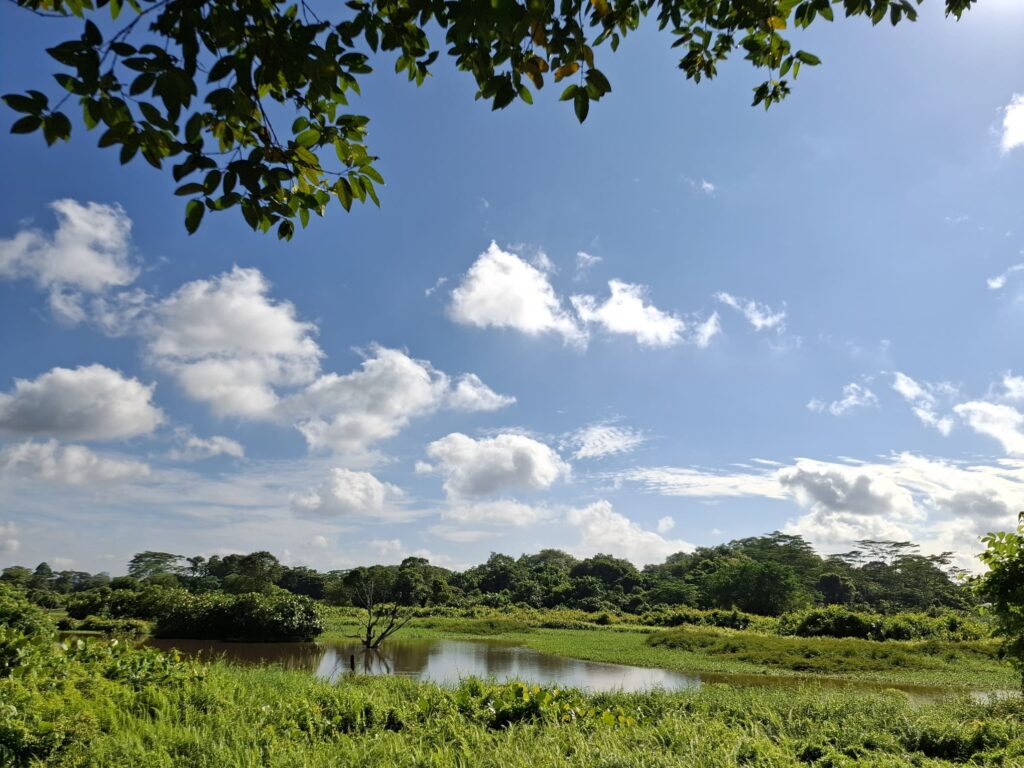
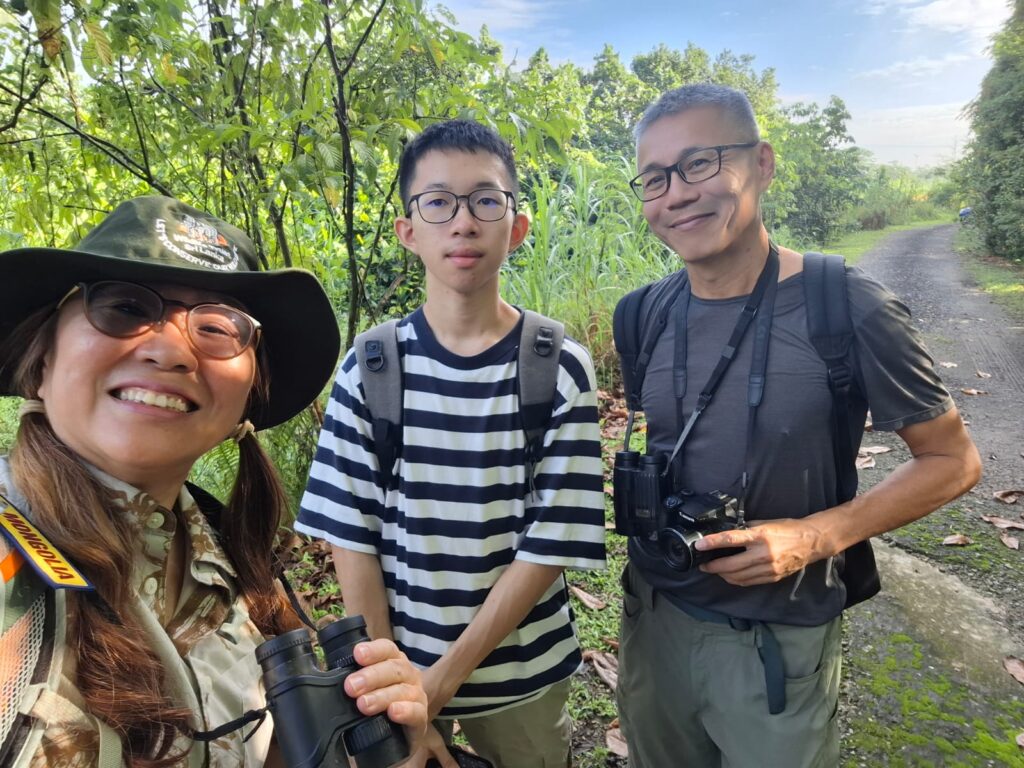
It was my first time birding, at the kind invitation of Dr Denise Dillon, as part of the private bird watching tour in the Core Conservation Area at Kranji Marshes she purchased during an auction at the 70th Anniversary Gala Fundraising Event of the Nature Society of Singapore in October 2024. Though I didn’t own a pair of binoculars, I wanted to be in the presence of nature, the plants and animals, and learn more about birds. Like many people living in urban Singapore, the few birds I was familiar with are those commonly seen in our built up landscape—mynahs, pigeons, crows and the Terkukor (Spotted Dove).
We met early on Saturday 4th October 2025, on World Animal Day, at the parking lot of the Sungei Buloh Wetland Reserve and piled into a van that shuttled us to a specially designated conservation area usually closed to the public, ten minutes away, led by volunteer bird guides from Nature Society Singapore, Wing Chong and Wee Jin. Wee Jin told us that peak migratory season for the birds runs from the end of October to early November.
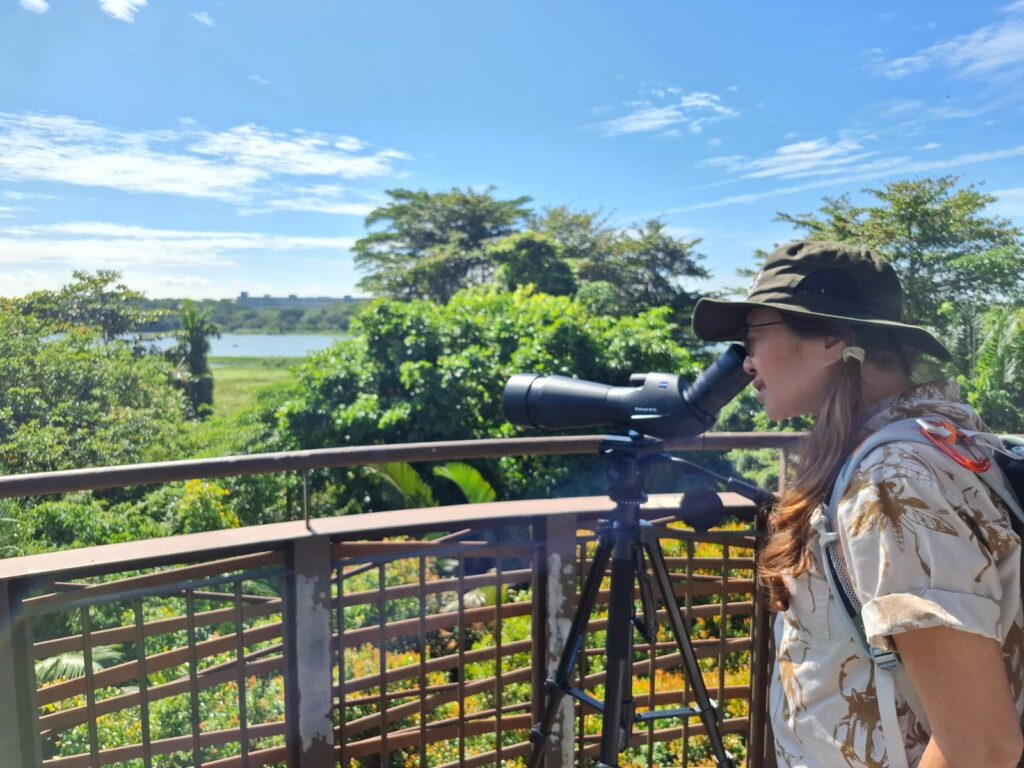
It turned out that my lack of binoculars, or a telephoto lens for my mirrorless camera, didn’t matter. Wee Jin had a telescope and invited us to take turns looking at the birds. Among the birds we saw at our first spot were a male Common Flameback (a woodpecker) on a rain tree, looking very dapper with his red mullet, the Lineated Barbet with its stunning green body, and the resplendently coloured Stork-billed Kingfisher, the largest kingfisher in Singapore, with its teal body, orange throat and red beak.
As we moved on to a second spot, more birds came into view or were recognised by their calls. Three types of parakeet—the Long-tailed Parakeet, the Rose-ringed Parakeet and the Red-breasted Parakeet. The first is a globally endangered native species, while the other two are non-native, introduced residents of Singapore. There was also an Oriental Magpie-Robin, a beautiful songbird frequently captured for its song, and several juveniles of the Asian Glossy Starling.
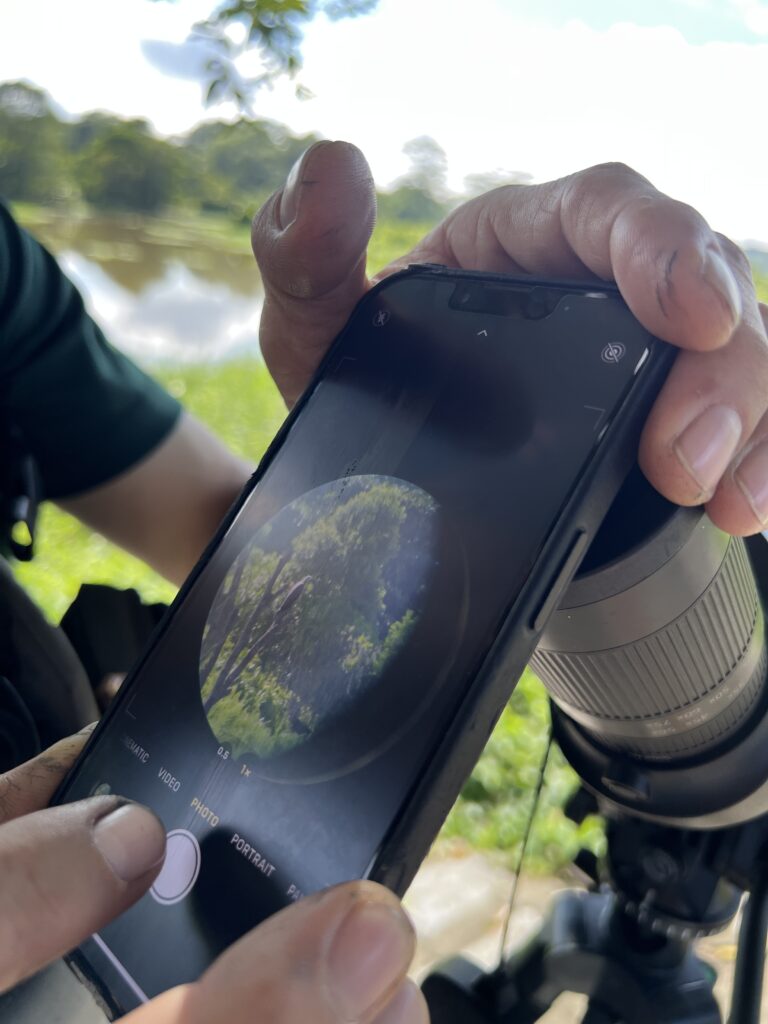
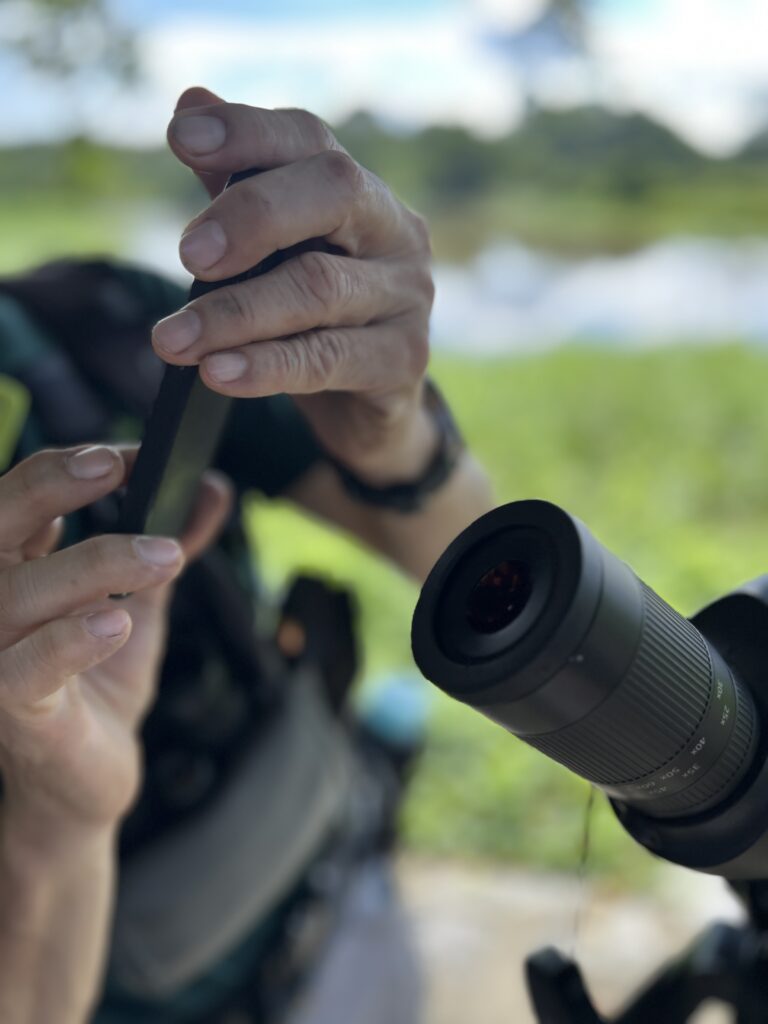
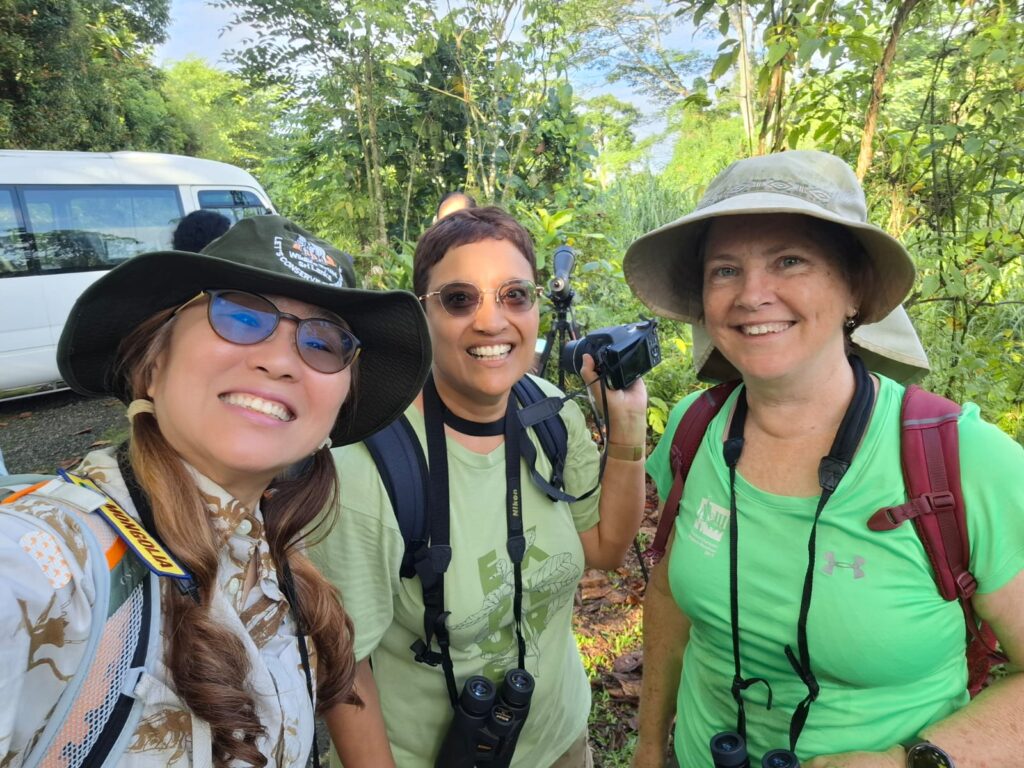
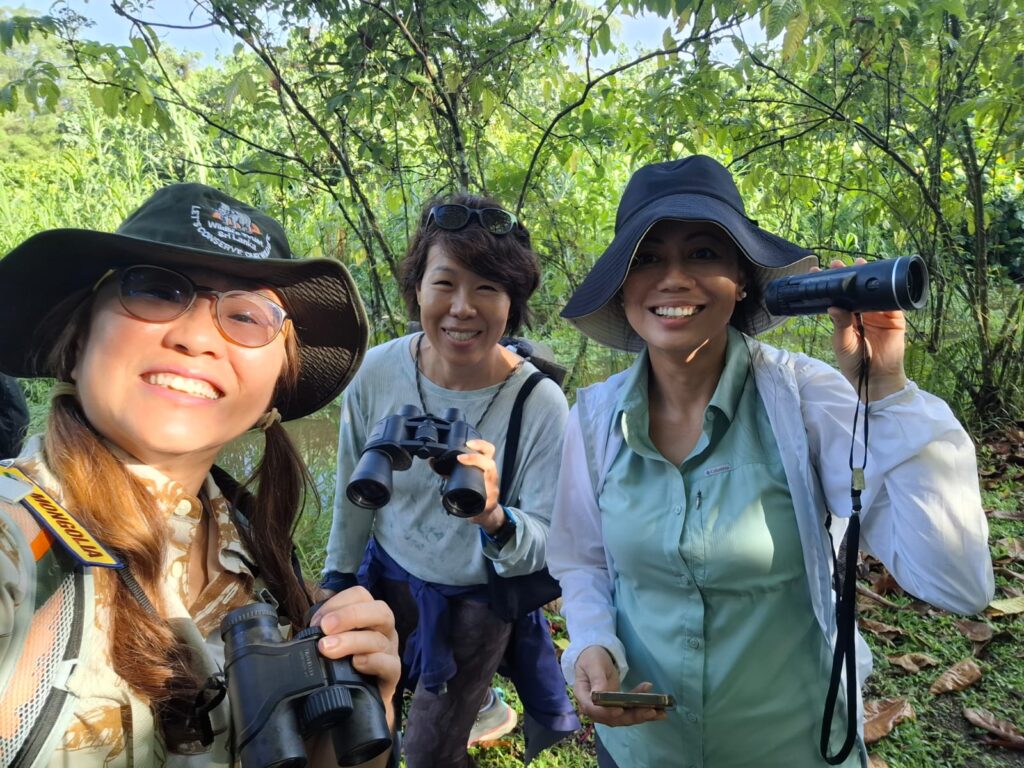
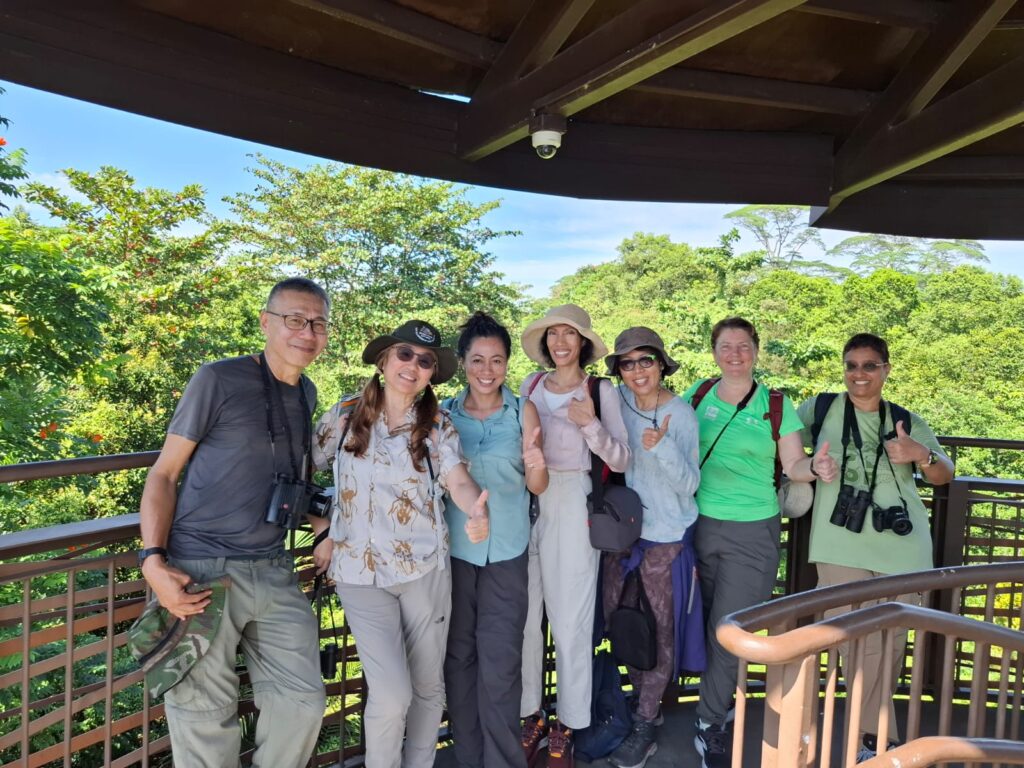
After some time, I began to wish I did have a lens to photograph the birds so I could remember them and enjoy their beauty later. That turned out not to matter either. Soon, Wee Jin showed us a neat trick to capture the images in the telescope, using just our smartphones!
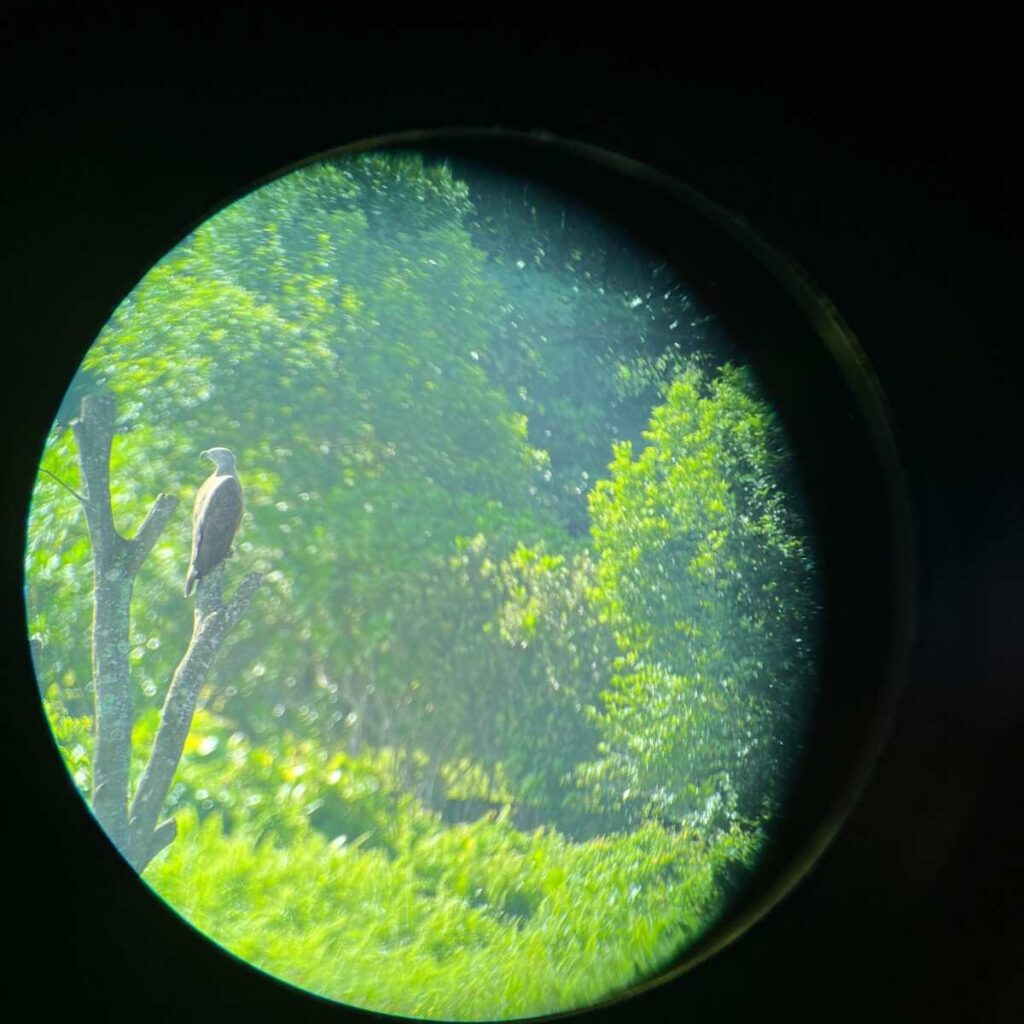
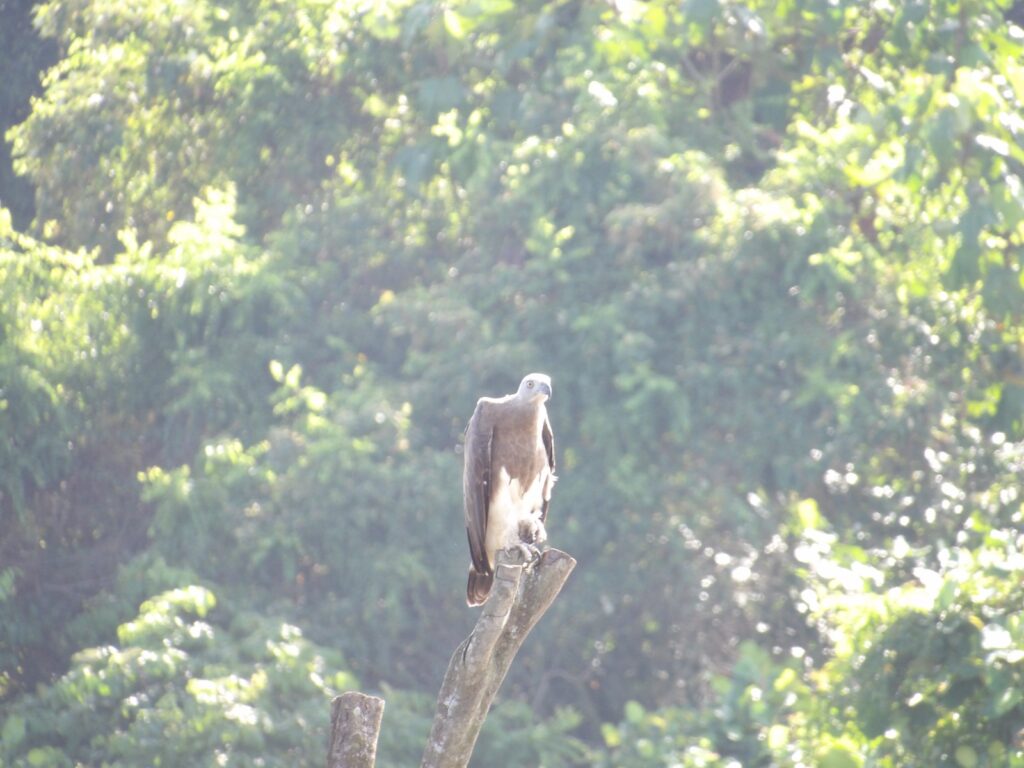
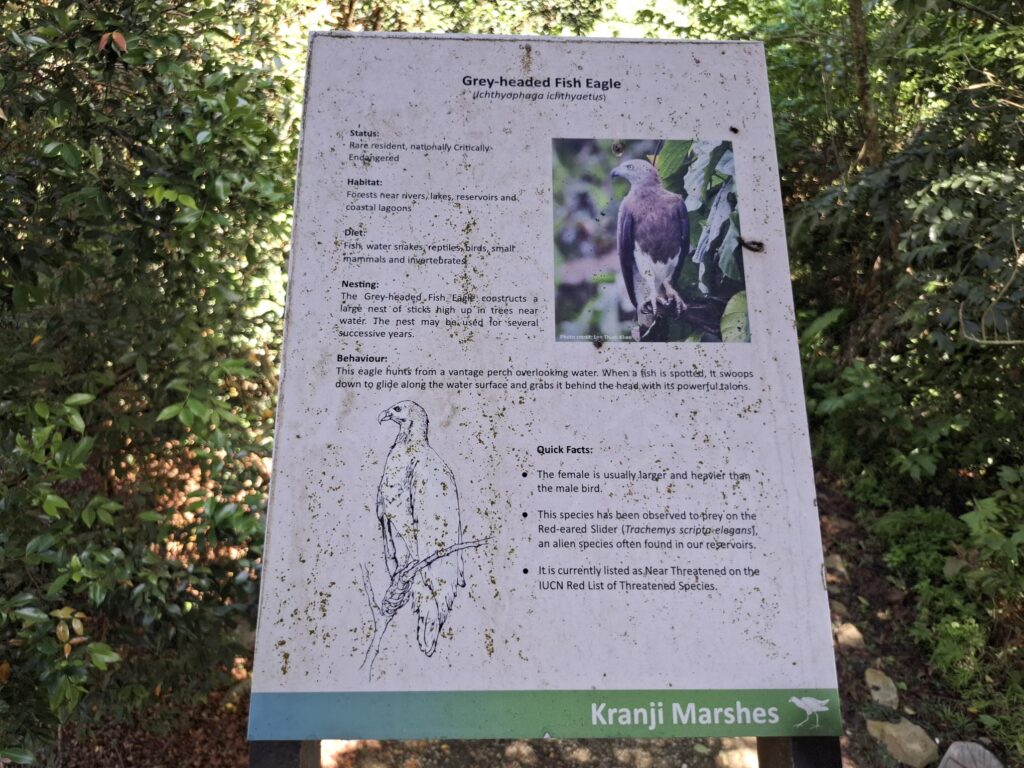
At one point, while we were walking on the path along the marshy water body, we spotted a Grey-headed Fish Eagle perched on a bare tree rising from the water in the distance. Its craggy shape flowed almost seamlessly into the stark silhouette of the tree.
In itself a rare sight, the eagle rested on the branch for an uncommonly long time while we gazed at it through binoculars or the telescope and took photographs. Wee Jin explained that eagles make use of thermalling to save energy to soar to greater heights. This thermal soaring involves the eagles gliding on columns of warm air (thermals) to carry them to higher altitude and over long distances for hours, without having to expend energy flapping their wings.
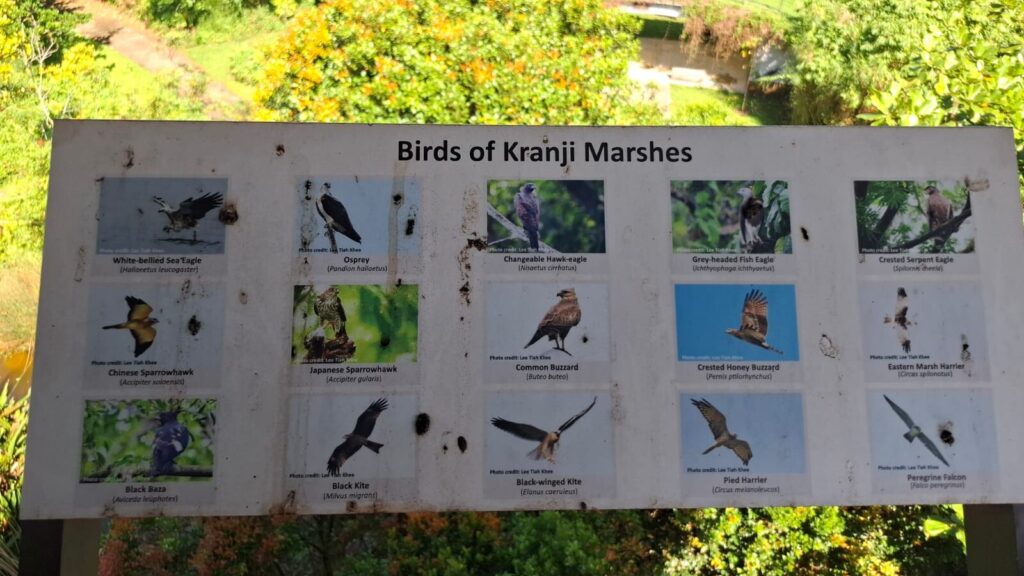
Wee Jin told us that all the raptor birds of Singapore—including the Brahminy Kite and the White-bellied Sea Eagle—can be seen in the Kranji marshes.
The Grey-headed Fish Eagle is a globally endangered raptor that is a native resident of Singapore, said Andrew Tay, co-founder of Cicada Tree Eco-Place. He spoke on the importance of conserving old, tall trees which are crucially needed by eagles to build their nests.
Besides birds, we passed the Simpoh Ayer plant (Dillenia suffruticosa), with yellow flowers and veiny leaves used to wrap tempeh. Also the Sea Hibiscus tree that has yellow flowers with a maroon throat, and the Sea Almond tree, whose ripe seeds taste like, yes, almonds. On the walk back, we passed long grasses with a cloud of Yellow-barred Flutterer dragonflies, identifiable by the yellow and black bars on their hind wings, which made me think of bees.
In the van, Wee Jin gave us a summary of the trip. In the short span of three hours, we had collectively seen a total of 41 bird species. Notable species were migrants like the Daurian Starling, also known as Purple-backed Starling. The Daurian Starling, a small bird with a greyish, dark body and white wing bars, usually appears in big groups. There was the Blue-throated Bee-eater with its chestnut head and the blue-black Oriental Dollarbird. At one point, a flock of Asian Glossy Starlings winged by above us.
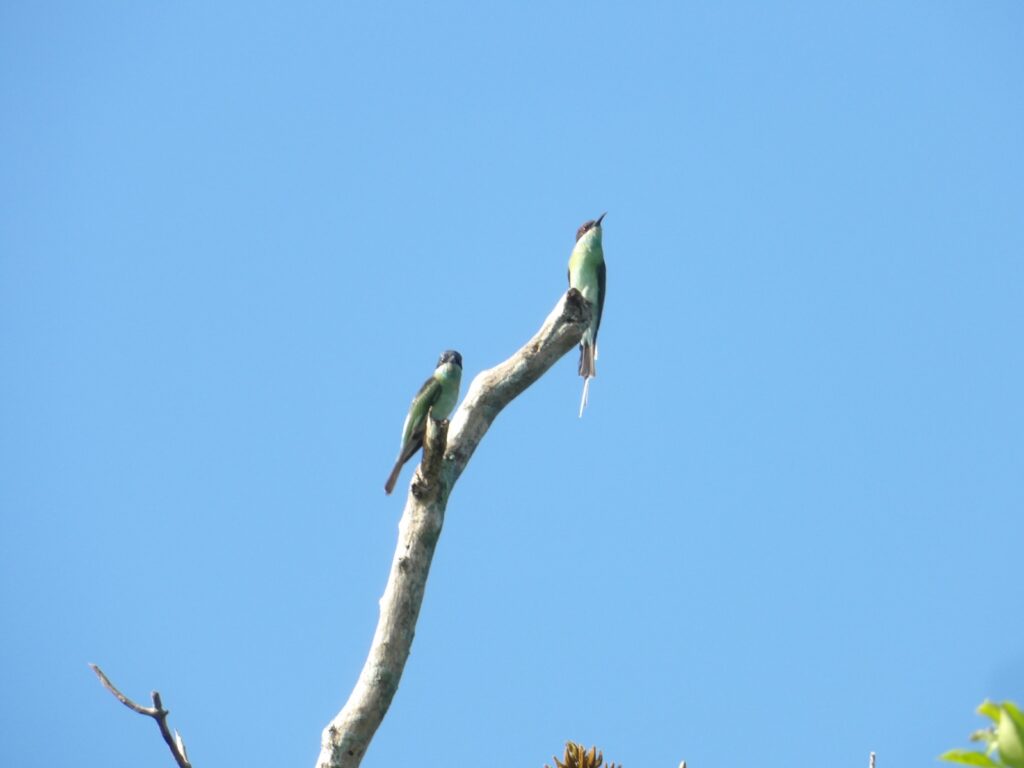
 Two Blue-throated Bee-eaters perched on a high bare branch, one of the striking migrant species seen during the walk.
Among the impressive resident birds were the Grey-headed Fish Eagle and the Changeable Hawk-Eagle and the very special Little Bronze Cuckoo spotted at the end of the trip, not a common sight.
Teresa Teo Guttensohn, co-founder of Cicada Tree Eco-Place, remarked that it was highly unusual to see the variety of birds we had in one outing and that we had been very lucky. As I watched the conservation marsh area with its avian denizens recede in the distance as the van pulled away, I felt exactly the same.
About Melissa De Silva
MA Arts & Ecology student at LASALLE College of the Arts – a transdisciplinary programme for those who seek to explore critical environmental discourses. Singapore Literature Prize Winner 2018 (Creative Nonfiction) for ‘Others’ is Not a Race. Melissa is an author, and has worked in journalism and publishing.