Written by: Rominia Leonard Photos by Jeryl Sim, Merey Tan, Pui Cuifen, Seetha Sharma, and Teresa Teo Guttensohn
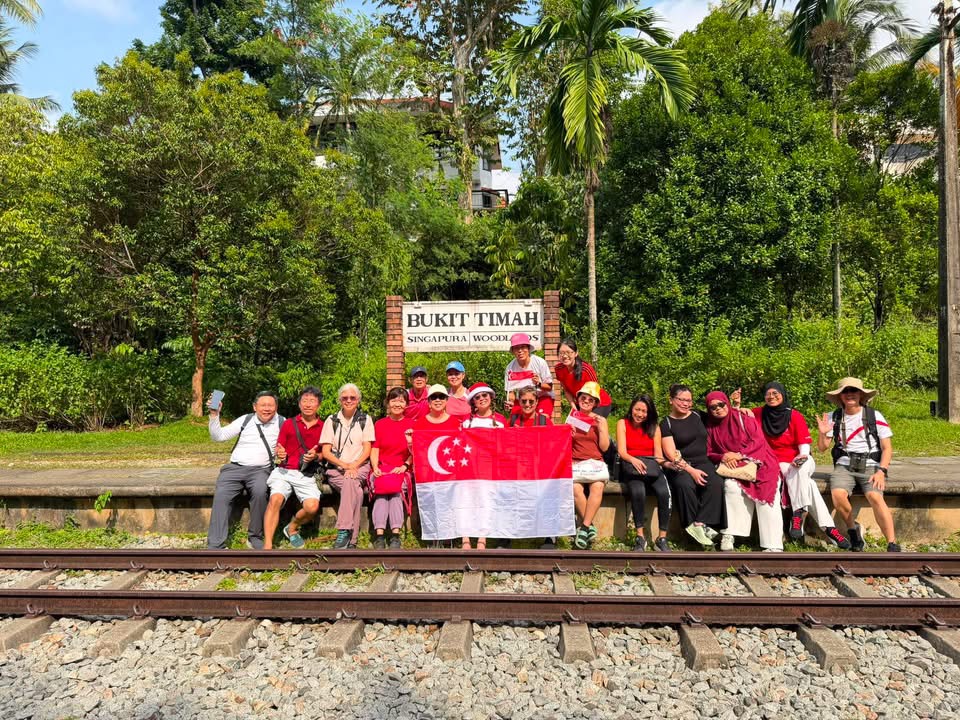
What better way to celebrate Singapore’s 61st birthday than by spending a morning discovering some of the wonderful wild neighbours with whom we share our island home?
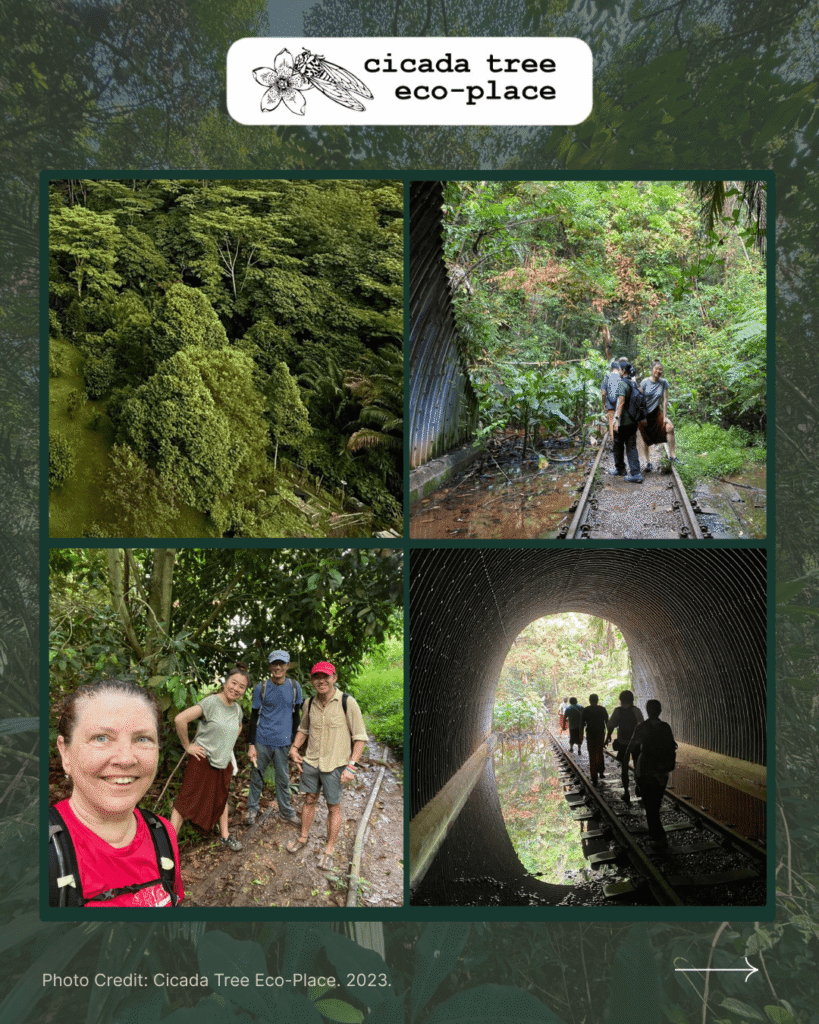
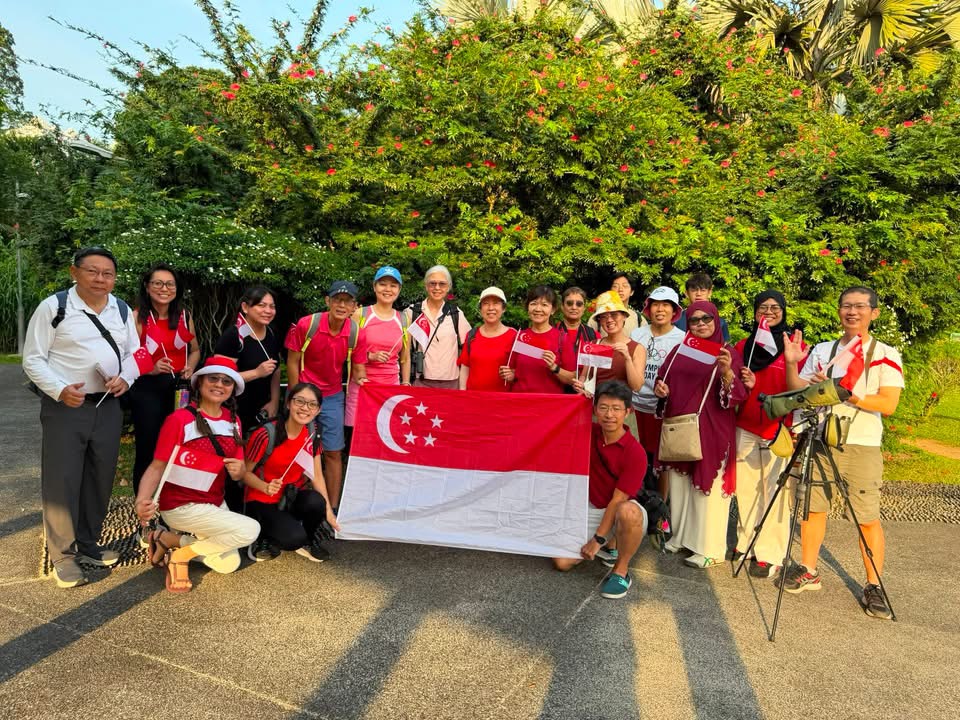
For our National Day Walk 2026, Cicada Tree Eco-Place welcomed nature lovers and friends for our annual walk, this year at the Rail Corridor — a simple tradition that reminds us that Singapore is not only a city of buildings and roads, but also a living landscape of trees, birds, butterflies, flowers and many other forms of life.
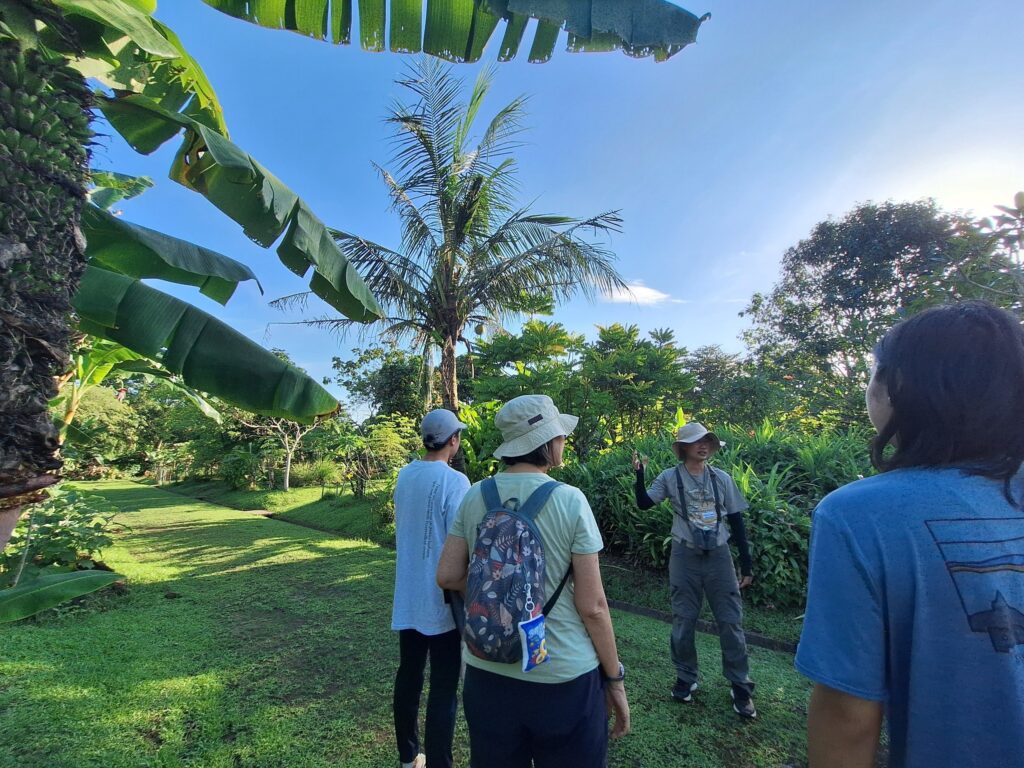
This year, we explored in two groups, led by our volunteer nature guides Tan Hang Chong, and Lifang together with Dr Vilma d’Rozario. With their sharp eyes, knowledge and enthusiasm, participants were encouraged to slow down, look more closely and discover the little wonders that are so easily missed in our everyday lives.
And nature did not disappoint us.
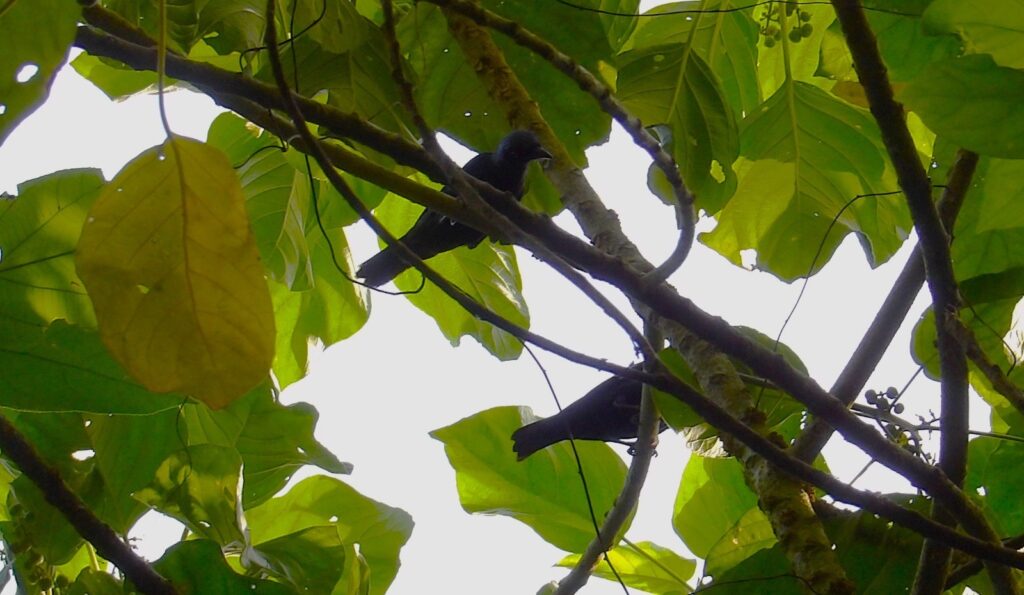
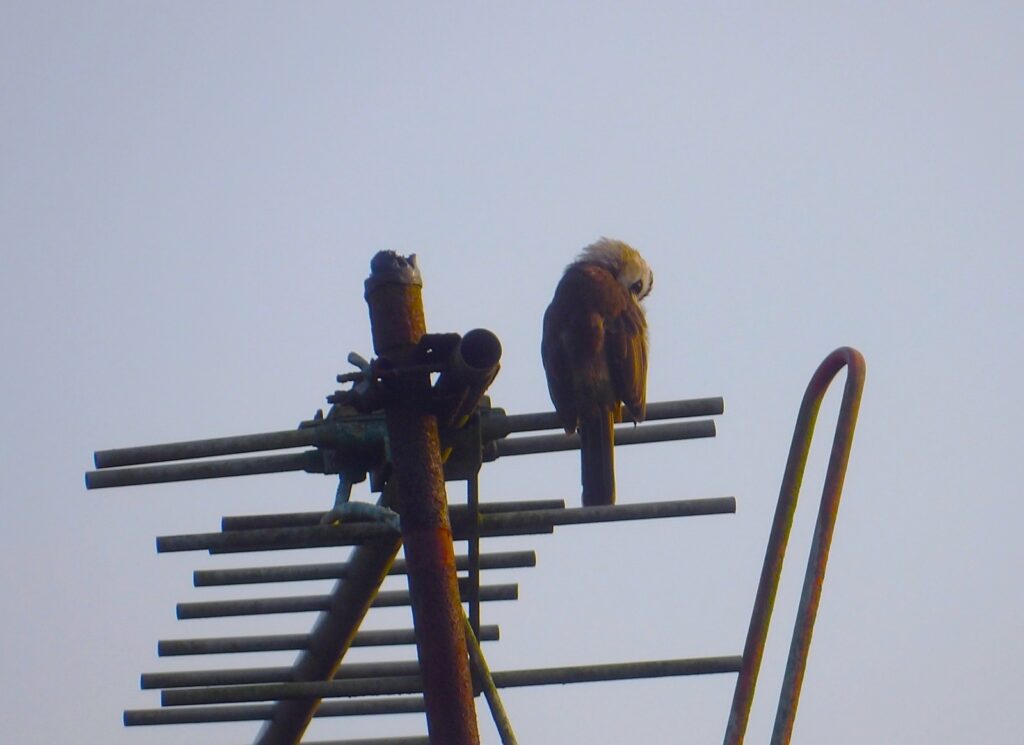
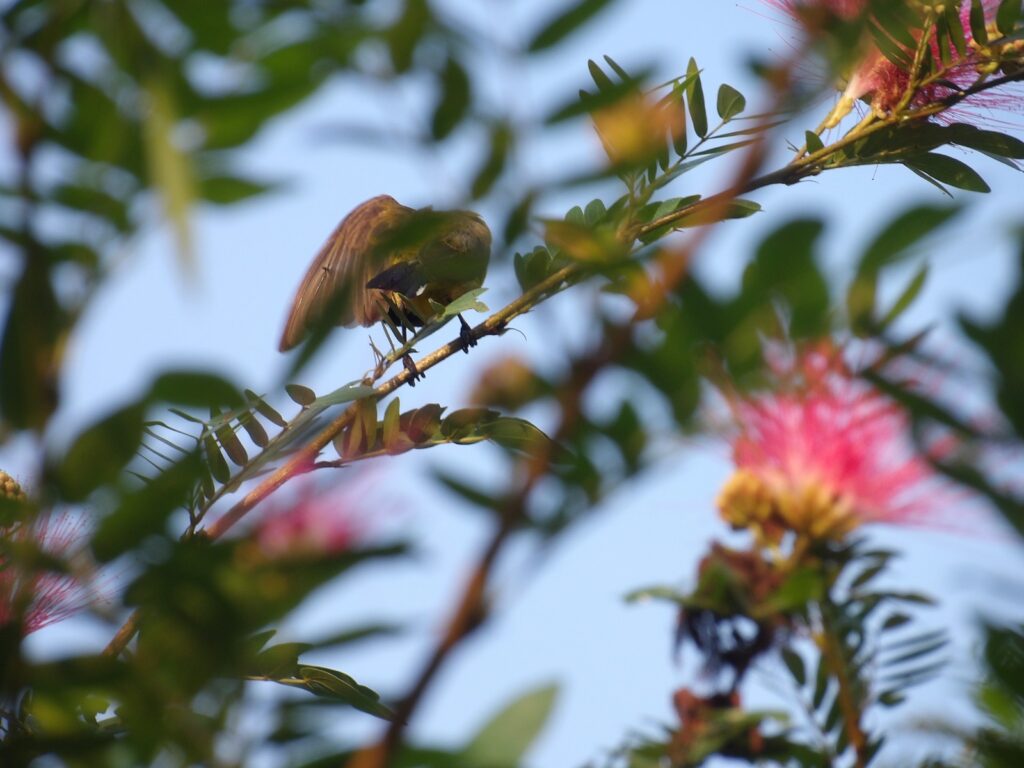
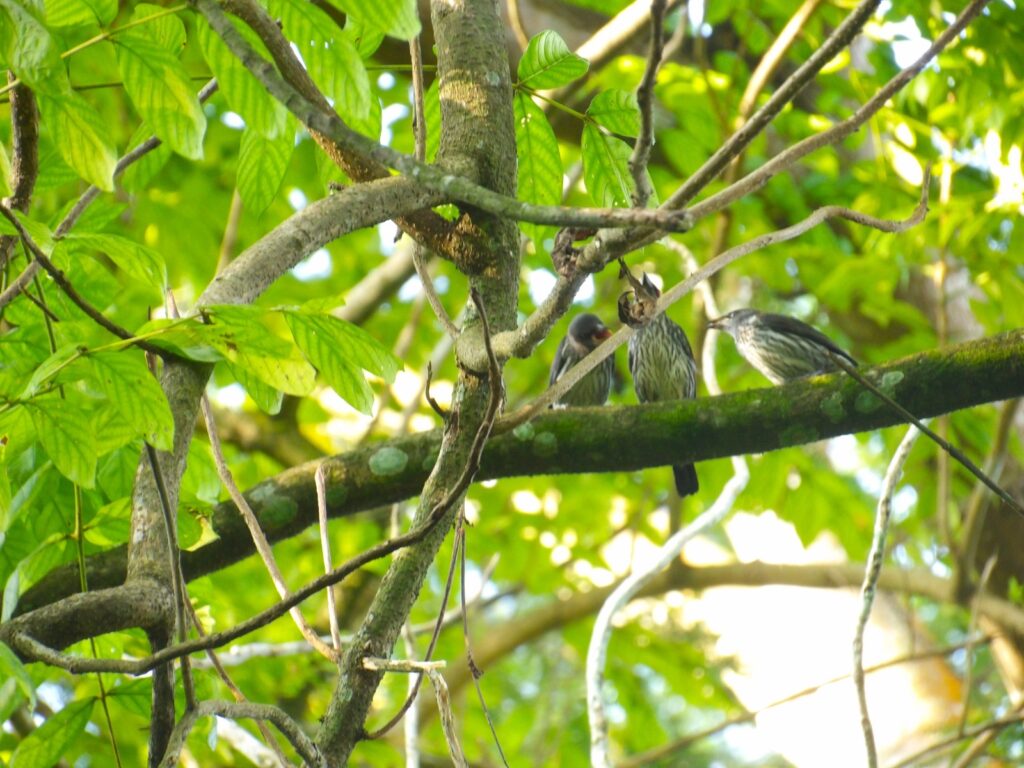
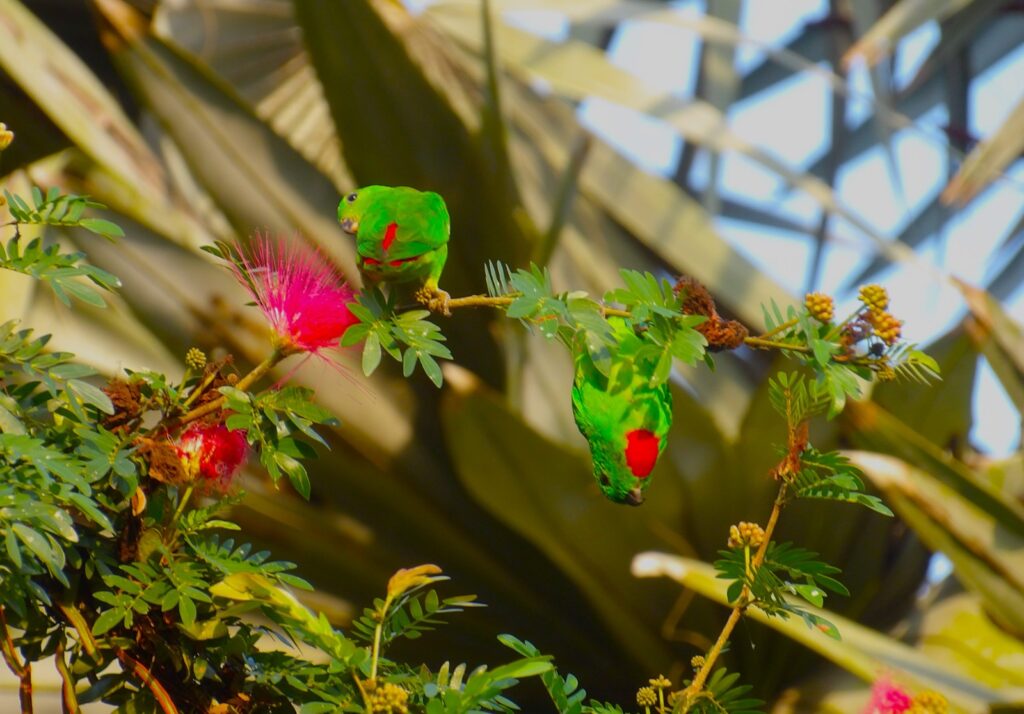
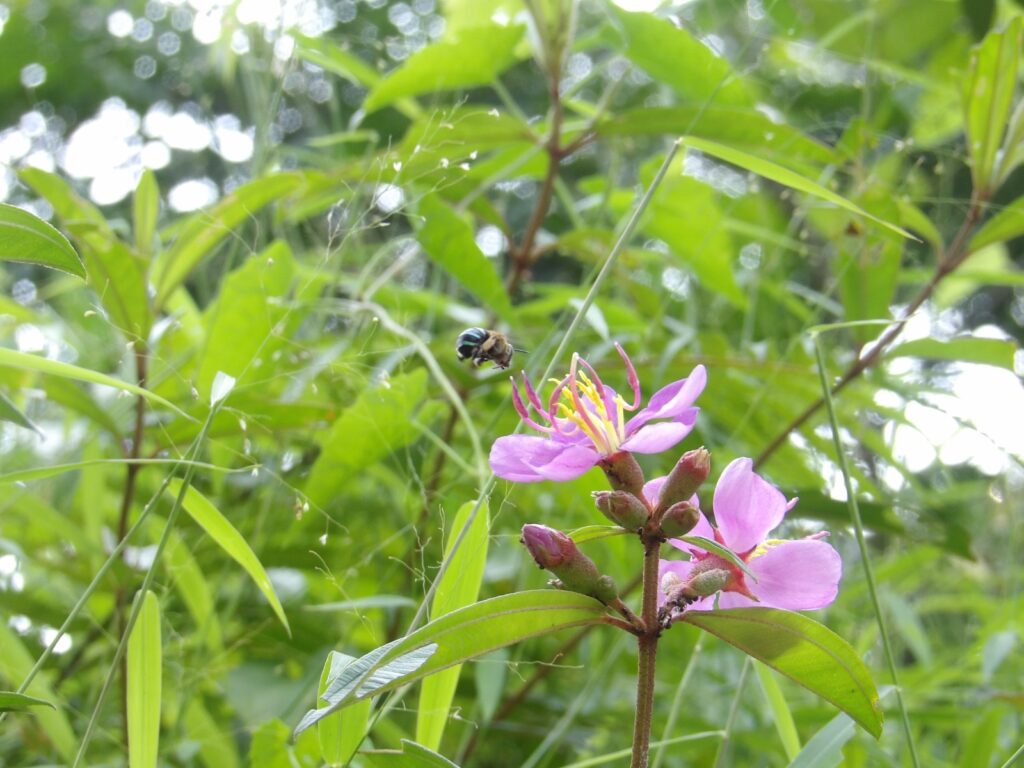
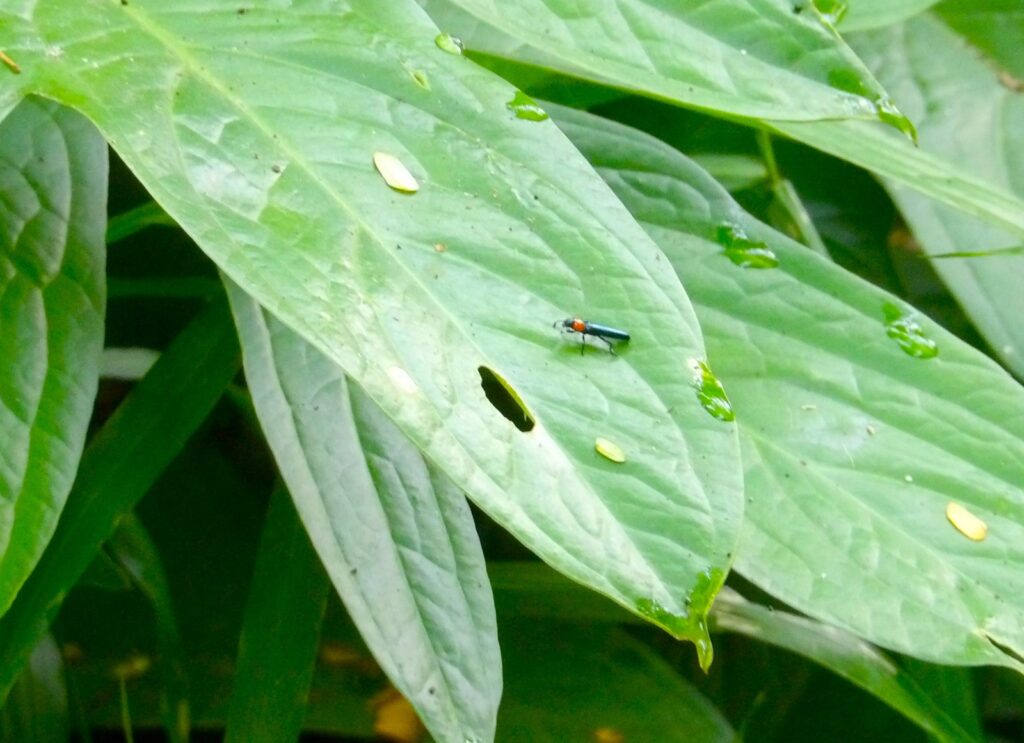
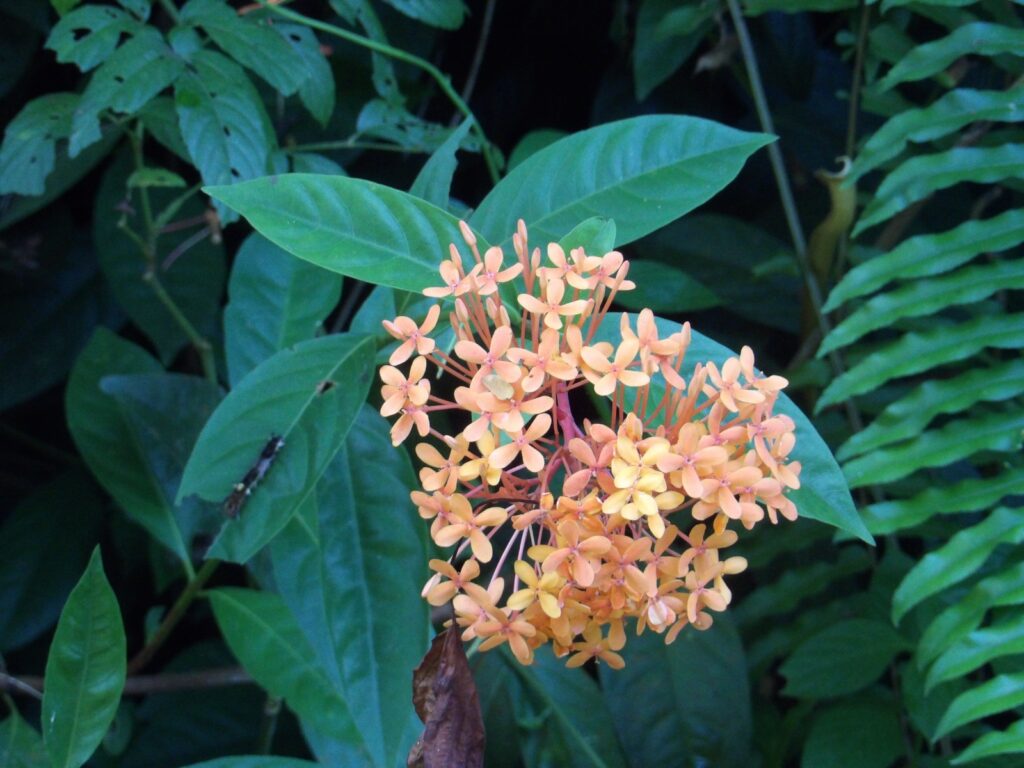
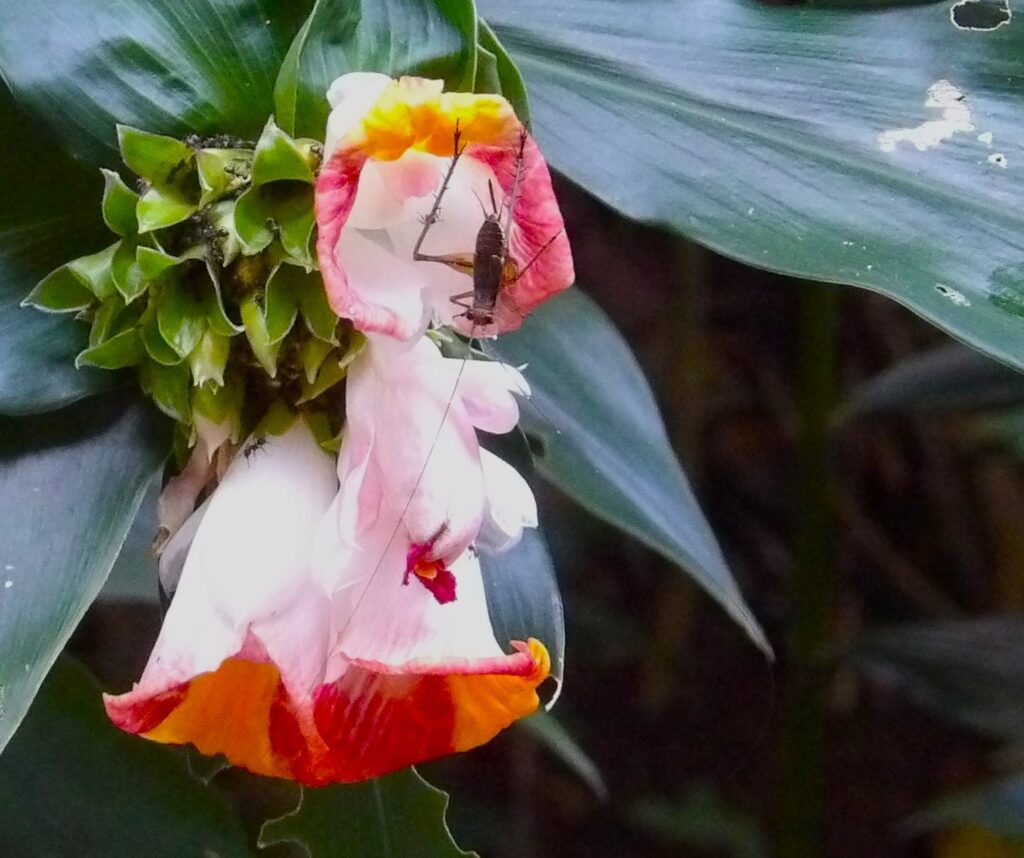
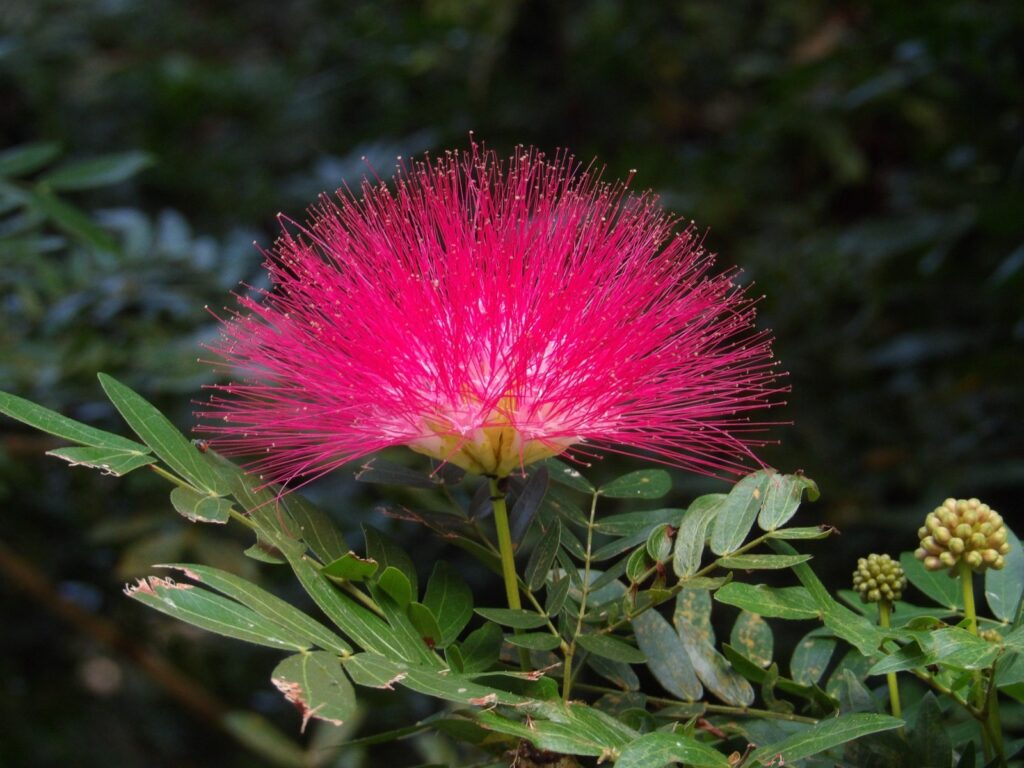
Among our feathered encounters were a flock of juvenile Asian Glossy Starlings, four colourful Blue-crowned Hanging Parrots feeding on powderpuff flowers, and a Yellow-vented Bulbul. We also spotted catfish, and along the way stopped to admire the many beautiful flowers, plants and other flora and fauna that make Singapore’s green spaces so full of life.
We were also treated to the beautiful serenading call of a cicada looking for love. Sometimes nature is not only about what we can see, but also what we can hear. Turn up the sound and listen!
Video credit: Dr Vilma D’Rozario
As we celebrated National Day, we were reminded that Singapore’s natural heritage is also part of our national heritage. Protecting the places where our native plants and wildlife can continue to thrive is something each of us can play a part in.
A heartfelt thank you to Hang Chong, Lifang and Dr Vilma, and to everyone who came along, asked questions, shared sightings and celebrated Singapore with us in nature.
Cicada Tree Eco-Place hopes to continue this National Day Walk every year, bringing more people outdoors to discover and cherish the wild Singapore that is still all around us.
There were many more beautiful moments and sightings from the morning, do visit our Facebook page to see the photographs from the walk.
Happy 61st Birthday, Singapore!
Keep looking, keep learning, and keep caring for our little red dot island.
Written by Rominia Leonard Photos by Intan Krishanty
Speakers and organisers of the Wildlife Writing Symposium 2026: Sivasothi N., Robin Hicks, Jeryl Sim, Dr Vilma D’ Rozario, Benedict Khoo, George Jacobs, Andrew Tay, Ng Kah Gay, Clarence Eng, Teresa Teo Guttensohn, Tia Andrea Guttensohn and Jessica Lee Chu En.
The Wildlife Writing Symposium 2026 was held on Saturday, 27 June 2026, at Bollywood Farms.
Generously sponsored by Bollywood Farms and The Gentle Warrior Ivy Singh-Lim, the event brought together home-grown writers, a publisher, educators, a journalist, students, artists and nature lovers for an afternoon of stories, poems, music, culture, nature walks and conservation.
Set in the lush and welcoming grounds of Bollywood Farms, the symposium created a meaningful space for everyone to reflect on one important question:
How can words help us care more deeply for wildlife and the natural world?
Through poetry, music, nature writing, journalism, film, blogging, pantun, guided walks and plant-based food, the event showed how storytelling can help us see nature with fresh eyes and inspire us to protect it.
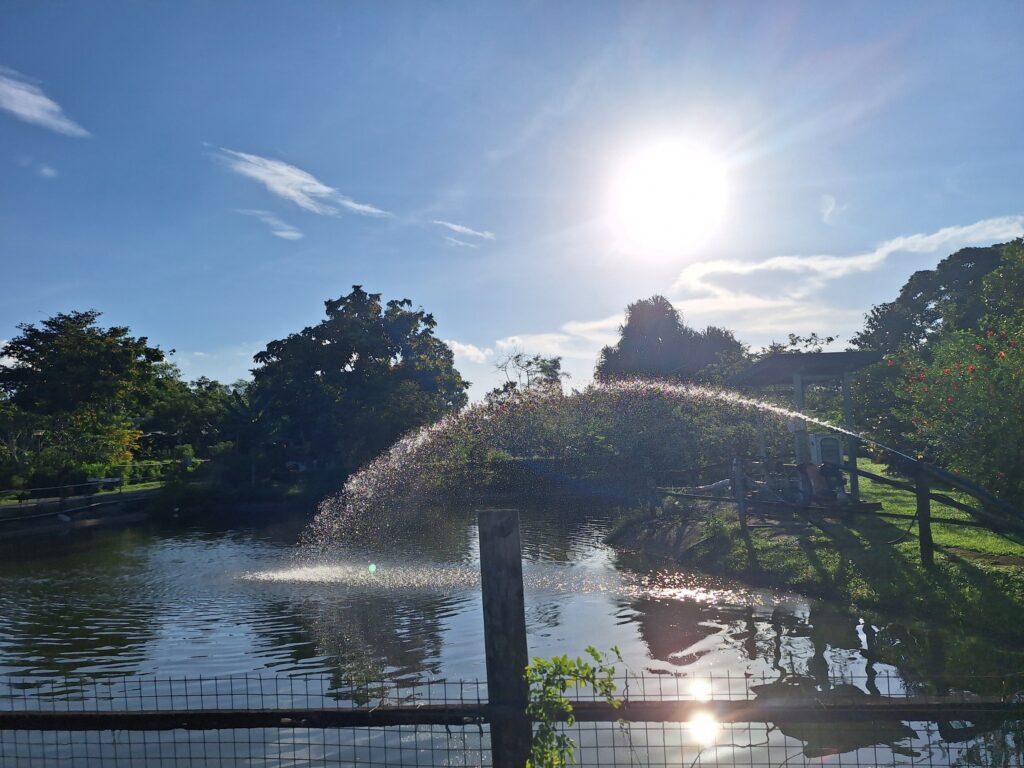
The lush grounds of Bollywood Farms provided a warm and natural setting for the symposium.
Set within the green and welcoming grounds of Bollywood Farms, the symposium offered more than a series of talks. It created a space for participants to slow down, listen, reflect and reconnect with the living world around them.
Nature details from Bollywood Farms reminded participants to slow down, observe closely and notice the living world around them.
“Such a lovely event.” — Robin Hicks
Left: Teresa Teo Guttensohn, Co-founder of Cicada Tree Eco-Place; Right: Lynn Ee, General Warrior of Bollywood Farms, giving the welcome remarks at the Wildlife Writing Symposium 2026.
The programme opened with welcome remarks by Teresa Teo Guttensohn and Lynn Ee, who welcomed participants and set the tone for an afternoon of learning, sharing and reconnecting with nature.
Their opening reminded everyone that caring for the natural world begins with attention, with noticing, listening and choosing to respond.
Left: lewloh; Right: Rene, performing the opening song at the Wildlife Writing Symposium 2026 at Bollywood Farms.
The welcome remarks were followed by a heartfelt opening performance by singer-songwriters lewloh and Rene.
Their music brought warmth and reflection into the room, gently opening the afternoon with a sense of connection and purpose.
lewloh performing during the opening segment of the Wildlife Writing Symposium 2026.
The performance reminded participants that stories do not only live on the page. They can also be carried through song, voice and shared emotion.
Tia Andrea Guttensohn, multicultural actor and educator, served as emcee for the Wildlife Writing Symposium 2026.
The event was beautifully hosted by Tia Andrea Guttensohn, who guided the afternoon with warmth, ease and confidence, helping every segment flow naturally.
Stories That Reconnect Us with Nature
The symposium featured a thoughtful line-up of speakers who explored how writing, books, films, journalism, blogs and poetry can help people understand and protect nature.
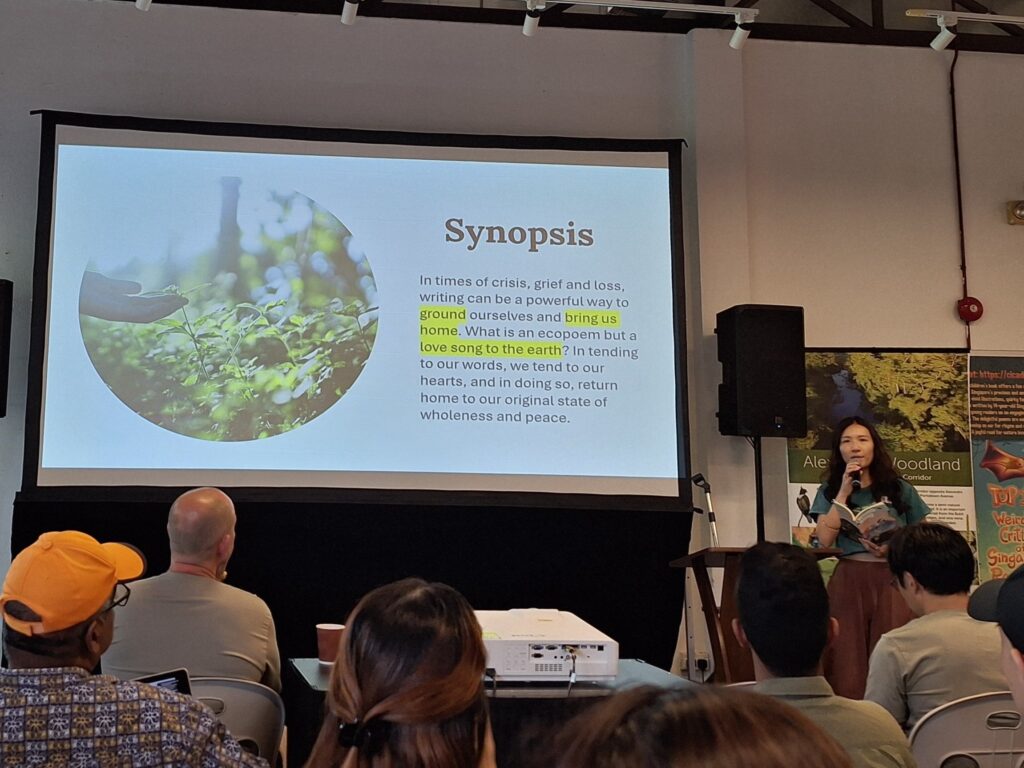
Esther Vincent Xueming opened the sharing with “Returning Home through Ecowriting.”
Esther Vincent Xueming opened the speaker sessions with “Returning Home through Ecowriting.”
She shared how writing can help us reconnect with places, memories and the living world around us. Her session invited participants to think about writing not just as creative expression, but also as a way of returning to land, memory, belonging and care.
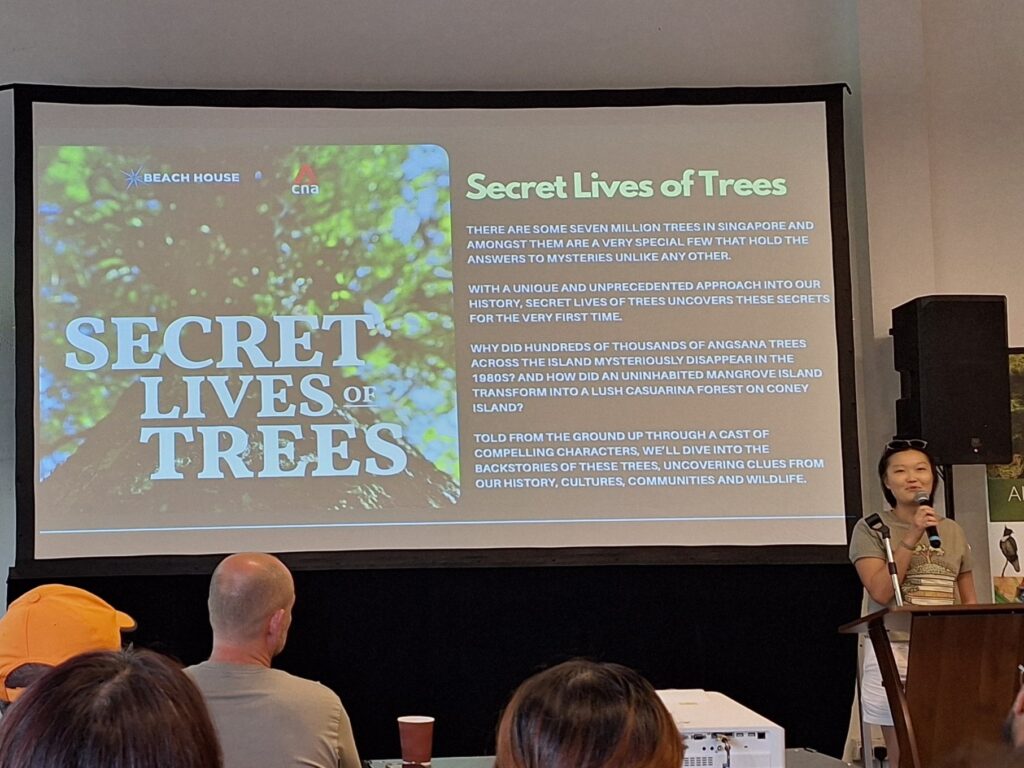
Jessica Lee Chu En shared “Nature in Non-fiction, from Screen to Book.”
Jessica Lee Chu En then shared “Nature in Non-fiction, from Screen to Book.”
She showed how nature stories can move across different forms, from film to books and other media. Her sharing reminded participants that stories can travel in many ways, and each form can help bring nature closer to different audiences.
Poetry, Pantun and Cultural Memory
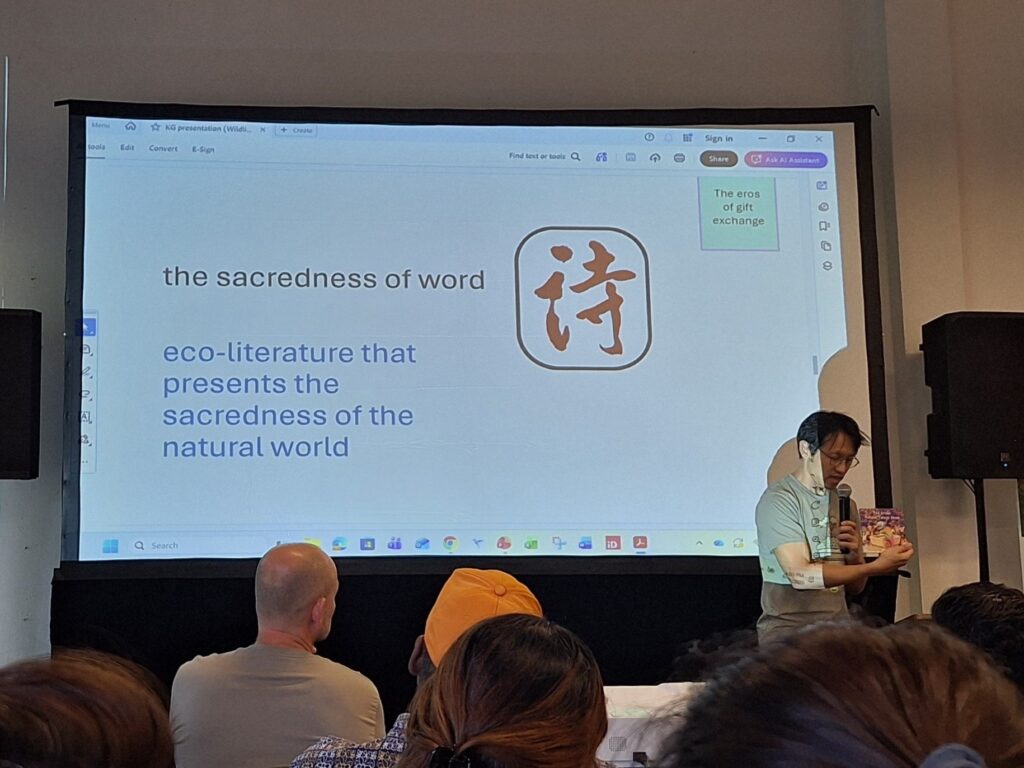
After the scumptious plant-based buffet spread by Poison Ivy Bistro, the programme continued with Benedict Khoo from Baba Gabra, who brought poetry, pantun, and Peranakan culture into the symposium.
Benedict Khoo of Baba Gabra sharing pantun, poetry and cultural reflections.
Through pantun and cultural storytelling, Baba Gabra added another rich layer to the event, showing how language and heritage can deepen our connection with nature.
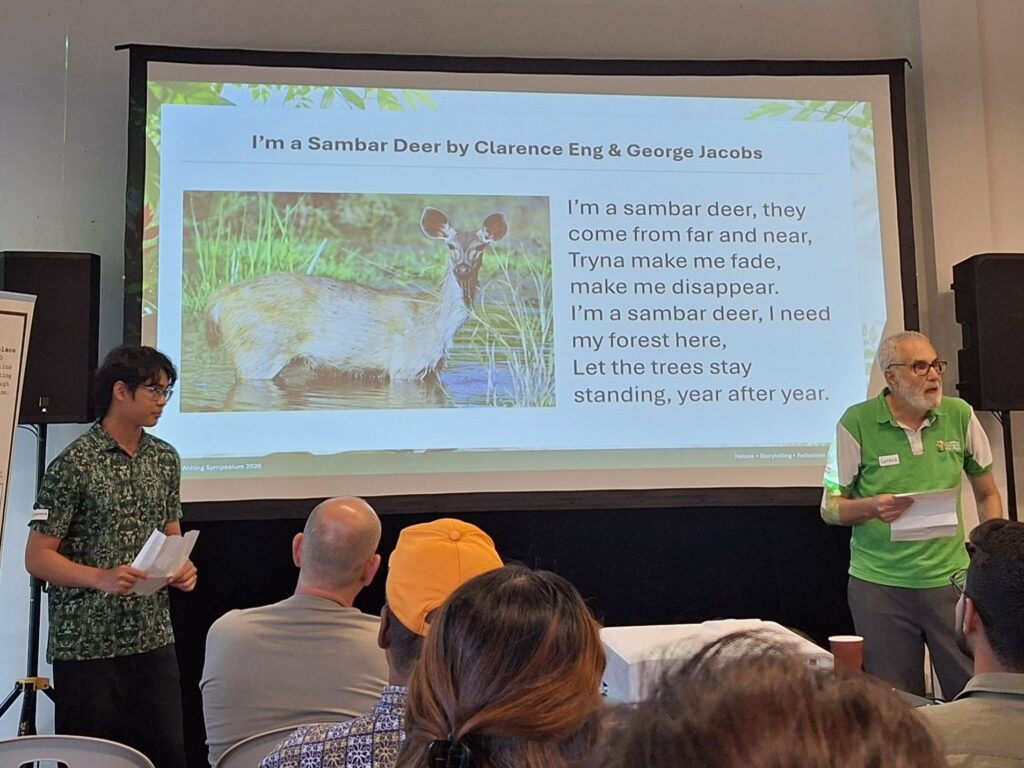
George Jacobs and Clarence Eng reading a poem about the sambar deer.
George Jacobs and Clarence Eng also read a poem about the sambar deer, adding a thoughtful and creative moment to the afternoon.
Their poetry reminded participants that wildlife is not only something to study or protect. It is also something to notice, honour and remember.
Writing as Education, Journalism and Advocacy
The next part of the programme focused on eco-literacy, journalism and advocacy exploring how words can help inform the public and inspire action.
Ng Kah Gay spoke on “Enhancing Public Eco-literacy.”
He shared why it is important for more people to understand nature and environmental issues, and highlighted the role of books, publishing and public education in shaping how people think about the natural world.
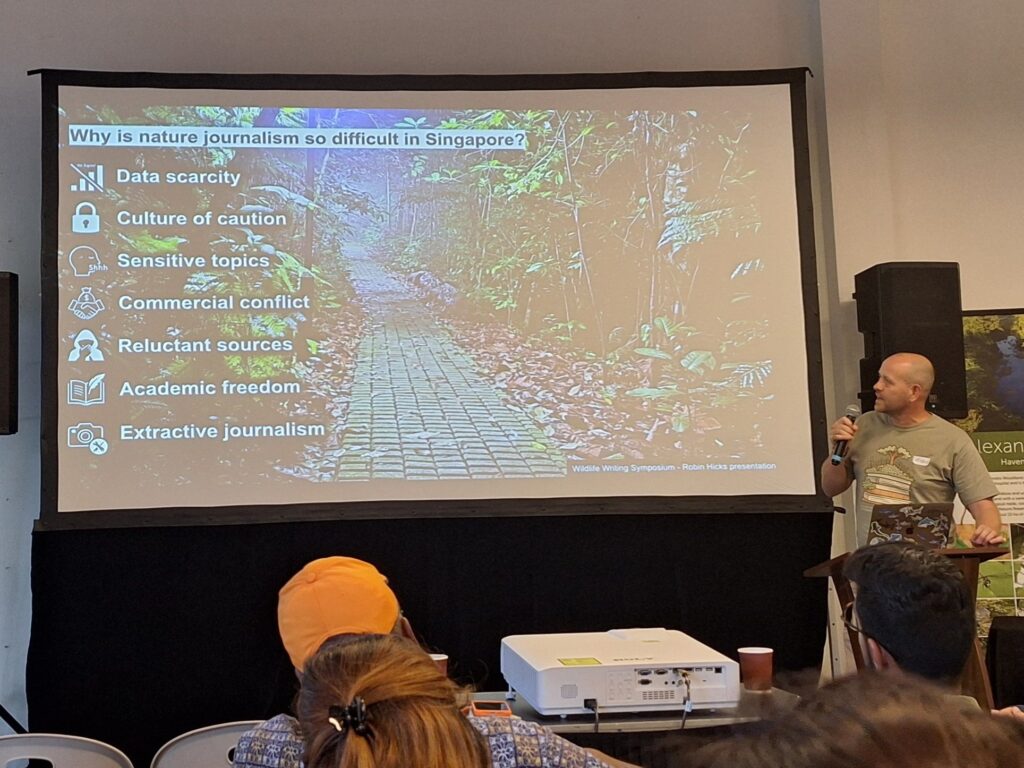
Robin Hicks spoke on “The Challenges of Nature Journalism in Singapore.”
He shared how journalism can help tell important stories about nature, development and conservation. His session offered a thoughtful look at how nature stories are reported, understood and sometimes challenged in a rapidly changing city.
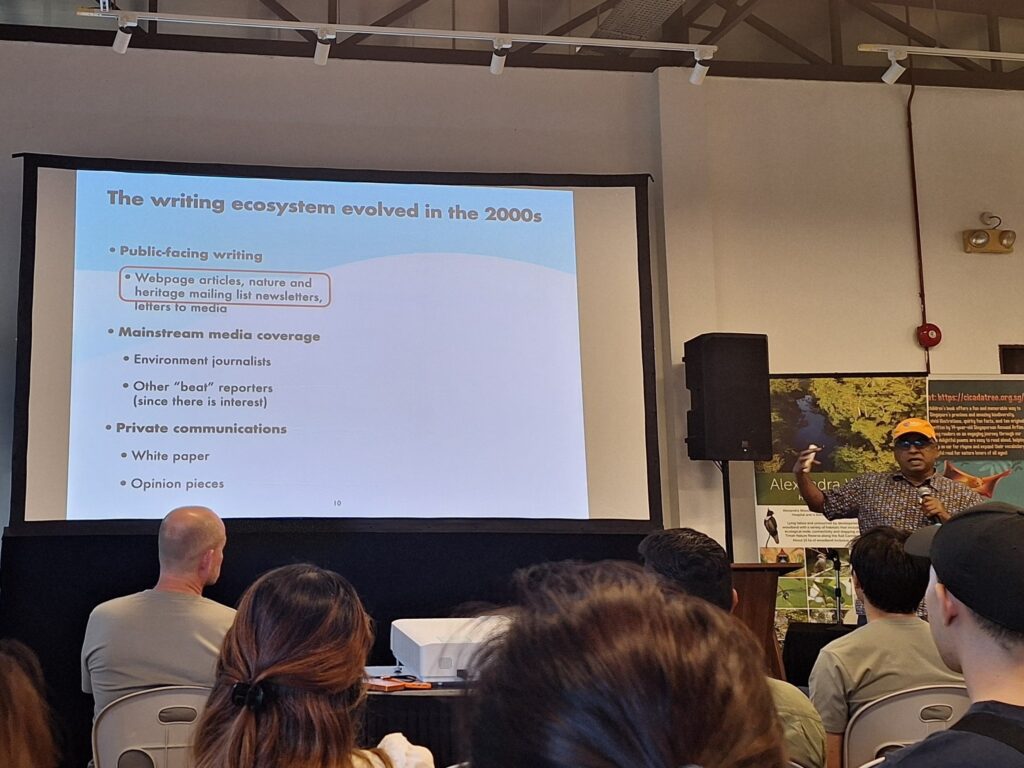
Sivasothi N. spoke on “Blogging Beyond the Classroom – A Meaningful Advocacy Tool.”
Sivasothi N. closed the speaker sessions with “Blogging Beyond the Classroom – A Meaningful Advocacy Tool.”
He showed how blogging and writing can continue to teach, inspire and create action beyond school. His sharing reminded participants that advocacy can begin with one person choosing to write, share and care.
“Good combination of speakers, multi-disciplinary, very fitting.” — Sivasothi N.
“Thanks for putting together such a meaningful symposium… Keep up the good fight!” — Jessica Lee Chu En
Experiencing Nature Beyond the Talks
From left: Tan Hang Chong, Andrew Tay and volunteer Ralph during the guided nature tour at Bollywood Farms.
Beyond the talks, the symposium also included fringe activities that allowed participants to experience nature, books and culture in different ways.
These activities included guided nature walks by Cicada Tree Eco-Place, led by Tan Hang Chong and Andrew Tay, a book sale by Ethos Books, a pantun booth by Baba Gabra, and an outreach booth by Cicada Tree Eco-Place.
The guided walks gave participants the chance to observe nature more closely and appreciate the living details around Bollywood Farms.
Baba Gabra’s pantun booth invited participants to experience poetry, language and culture in a fun and meaningful way.
The pantun booth by Baba Gabra gave participants a hands-on way to enjoy poetry, language and culture, making the symposium lively, interactive and memorable.
The book sale by Ethos Books and the Cicada Tree Eco-Place outreach booth also gave participants more ways to browse, ask questions and continue their nature journey beyond the talks.
“A great crowd — not too big, intimate enough for a fun sharing.” — Benedict Khoo, Baba Gabra
What Students Took Away
Students took part in talks, discussions and activities throughout the Wildlife Writing Symposium 2026.
Feedback from students showed that the symposium made a real learning impact.
Many students shared that the guided nature walk was one of their favourite parts because it allowed them to see and appreciate nature more closely.
“I had the opportunity to see and appreciate the different types of nature.” — Student participant
Students explored the natural surroundings of Bollywood Farms during the guided nature walk.
Another student enjoyed the pantun sharing by Baba Gabra because it showed how poetry can help connect people with nature and local wildlife.
For the students, the symposium offered many different ways to connect with nature through walking, listening, writing, eating, culture and conversation.
Participants enjoyed plant-based makan by Poison Ivy Bistro during the symposium tea break.
The plant-based makan by Poison Ivy Bistro was also warmly received.
One student shared that they usually preferred food with meat, but the food at the symposium was so good that it made them more open to trying plant-based meals in the future.
“After eating the food at the Symposium, I feel more inclined to try out more plant-based food in the future.” — Student participant
Supporting Conservation Action
The symposium also supported Trees for Tigers, with a total contribution of $1,500, including additional support from Cicada Tree Eco-Place.
This turned the afternoon’s conversations into meaningful conservation action showing that stories can move beyond words and help support real work for wildlife.
Volunteers, partners and participants helped make the Wildlife Writing Symposium 2026 a meaningful community event.
Cicada Tree Eco-Place extends its heartfelt thanks to everyone who helped make the Wildlife Writing Symposium 2026 possible – the speakers, performers, partners, students, volunteers and participants.
Special thanks go to all donors who contributed to Trees for Tigers, Bollywood Farms, Poison Ivy Bistro, Ethos Books, Baba Gabra, Anglican High School, CHIJ Katong Convent, Guides Andrew Tay and Tan Hang Chong, as well as volunteers Amaani, Intan, Jeryl, Kripa, Merey, Mindy, Radiah, Ralph, Rominia, Seetha, Teresa and Vilma.
Speakers and partners were appreciated for sharing their voices, stories and support with the symposium community.
The Wildlife Writing Symposium 2026 reminded everyone that stories are powerful.
Stories can help us remember nature. Stories can help us care. Stories can help us speak up for wildlife. Stories can help inspire action.
Through poetry, journalism, film, books, blogging, culture and shared experiences, the event showed that every voice can help protect nature.
Speakers, students, partners and volunteers closed the Wildlife Writing Symposium 2026 with a shared commitment to nature, stories and conservation.
Following the warm response from speakers, partners, students and participants, Cicada Tree Eco-Place hopes to continue creating meaningful events where writing, culture, education and conservation come together.
The day closed with a shared reminder that every story, every voice and every small act of care can help protect the natural world.
For more photos and highlights from the Wildlife Writing Symposium 2026, visit Cicada Tree Eco-Place on Facebook and Instagram.
Just ten minutes’ bumboat ride from mainland Singapore, Pulau Ubin is a close representation of Singapore in the 1960s, preserving the rustic, undeveloped kampong (village) life that the mainland lost to rapid modernisation.
Pesta Ubin is a ground-up community festival made possible by the Friends of Ubin Network (FUN), with the strong support and collaboration of the National Parks Board (NParks). It is organized by passionate volunteers, villagers, and various nature and heritage interest groups. Ubin Day on 20 June 2026 celebrated the finale of Pesta Ubin.
This year, Cicada Tree Eco-Place (CTEP) organised a guided walk to explore the fascinating world of cicadas and butterflies in one of Singapore’s most unique natural habitats.
All 50 participants gathered at Ubin Gallery before we started on our trails. Hang Chong was the guide for Group A, which focused on cicadas and butterflies, while Andrew was the guide for Group B, exploring the sensory trail and the local villagers’ house.
Starting with the sensory trail, participants in Group B saw many herbs and fruit trees such as papaya, banana, rambutan and breadfruit etc.
Science came alive for 14 year-old Yves Leonard and Zach Tan, as they learnt more about the plants which were used in Southeast Asian cooking, like the lemongrass, pandan leaf and fruits/ leaves of the Asam Gelugor. Resembling a small pumpkin, the Asam Gelugor adds a sour tang to curries.
Zach felt that the most memorable part of the Ubin trip was the visit to the kampung house, where he saw many household items that he had not seen before.
A walk down memory lane, evoking feelings of nostalgia in the village charm was Teck Seng’s Place – a conserved 1970s Chinese kampong house. Once owned by a local provision shop owner, it is now an open-house heritage museum that lets visitors experience nostalgic village life. The coal-fired iron, stone mortar, Singer sewing machine, red wooden clogs, and even a ‘bridal chamber’ – remnants of yesteryears where life was simpler.
Group A went to Butterfly Hill, where lots of Black-veined Tiger Butterflies were having a party! According to NParks, this sanctuary is home to over 140 unique butterfly species in Pulau Ubin itself!
Victoria Lim shared, “Andrew is a very knowledgeable guide who brought us along the sensory trail and introduced us to many spices and wildlife that Pulau Ubin has to offer. Though the weather was hot, we were sheltered by trees most of the way, making the walk decently comfortable, but bring mosquito repellent!”
“Thanks to Hang Chong and Intan for the sharing. It was a wonderful learning and exploration experience!”, said Janus Goh.
Indeed, Ubin is worth many visits for its flora and fauna, and facets of village life. So this year’s slogan : “Share the island, Shape the Future” is very apt!
What a wonderful weekend it was at the Festival of Biodiversity 2026!
Cicada Tree Eco-Place (CTEP) was happy to be part of this meaningful event, held on 6 and 7 June 2026 at the Plaza, National Library Singapore. Over the two days, we had the pleasure of meeting more than 100 visitors who stopped by our booth to learn, ask questions, share stories, and discover more about Singapore’s amazing biodiversity.
As a non-profit NGO focused on environmental education, conservation, and helping people connect with nature, events like this mean a lot to us. They give us the chance to bring nature closer to the community in a simple, fun, and memorable way.
At our booth, visitors of all ages enjoy a range of hands-on activities. Our Cicada quiz was a popular highlight, introducing visitors to 10 fast facts about cicadas. Many were surprised to learn that cicadas are not just “the loud insects we hear in parks and forests” but important creatures that play a role in our ecosystem.
Left:10 Fast Facts about Cicadas poster by Rominia and Teresa Right: Cicada specimens display by Maosheng (on loan from LKCNHM) Magical Cicadas – moults of nymphs left behind on tree bark, prepared by Andrew
Children and families also enjoyed the cicada colouring activity, while nature lovers explored our displays and learned more about the life cycle and importance of cicadas. It was lovely to see people slow down, observe closely, and become curious about the small living things we often overlook.
A popular display at our booth featured “Magical Cicadas” — moults of nymphs left behind on tree bark, offering visitors a closer look at one of nature’s fascinating transformations. Together with our 10 Cicada Fast Facts poster and colouring activity, the display helped visitors better understand the life cycle of cicadas and their importance in our local ecosystems.
One of the most exciting moments for us was seeing the strong support for our nature books. We are delighted to share that our Alexandra Woodland and Pang Sua Woodland books were completely sold out during the event. This shows that more people are becoming interested in local biodiversity and the stories that help us appreciate the natural spaces around us.
The festival also gave us the chance to meet new friends, supporters, and volunteers who share our love for nature and conservation. We were especially encouraged to welcome new volunteers who expressed interest in supporting our future programmes and activities.
A big thank you to the Student Volunteers from Class 2H, Anglican High School, and the CTEP volunteers for making this activity meaningful and memorable.
A very special thank you goes to the student volunteers from Class 2H of Anglican High School, Gerard Tan (CCE Ambassador of Class 2H), and their teacher, Mr Yeo. Their energy, kindness, and enthusiasm made a real difference at our booth. They helped engage visitors, support the activities, and share the joy of learning about nature.
We were also happy to receive interest and new sign-ups for our upcoming Wildlife Writing Symposium 2026. It was encouraging to meet people who believe that writing and storytelling can help inspire care, action, and deeper appreciation for wildlife and biodiversity.
Events like the Festival of Biodiversity remind us that conservation starts with awareness. Every question asked, every conversation shared, every book read, and every new connection made helps bring people closer to nature.
We would like to thank the organisers, volunteers, supporters, and everyone who visited our booth. Your encouragement means so much to us and inspires us to continue our work in environmental education, conservation, and community engagement.
Join Us at the Wildlife Writing Symposium 2026
If you love wildlife, nature, conservation, writing, or storytelling, we invite you to join us at the Wildlife Writing Symposium 2026.
Together, we will explore how stories can educate, inspire action, and help people see the world with fresh eyes.
Thank you for being part of our journey. We look forward to seeing you again at our future events, including the Wildlife Writing Symposium 2026.
For updates on upcoming programmes, volunteer opportunities, and environmental events, follow Cicada Tree Eco-Place on Facebook and Instagram and stay connected with our growing community of nature lovers.