Written by: Neo Xin Yuan
Photos by: Neo Xin Yuan
This article originally appeared in Concrete and is reprinted here with permission.
As historic heatwaves sweep across the UK and Europe, we are reminded of climate change and its disproportionate effects. But amid a volatile geopolitical environment, concrete climate action remains limited after Cop30.
In response, Singapore’s first Wildlife Writing Symposium suggests that literature and creative storytelling can help us communicate compellingly about nature and inspire climate action.
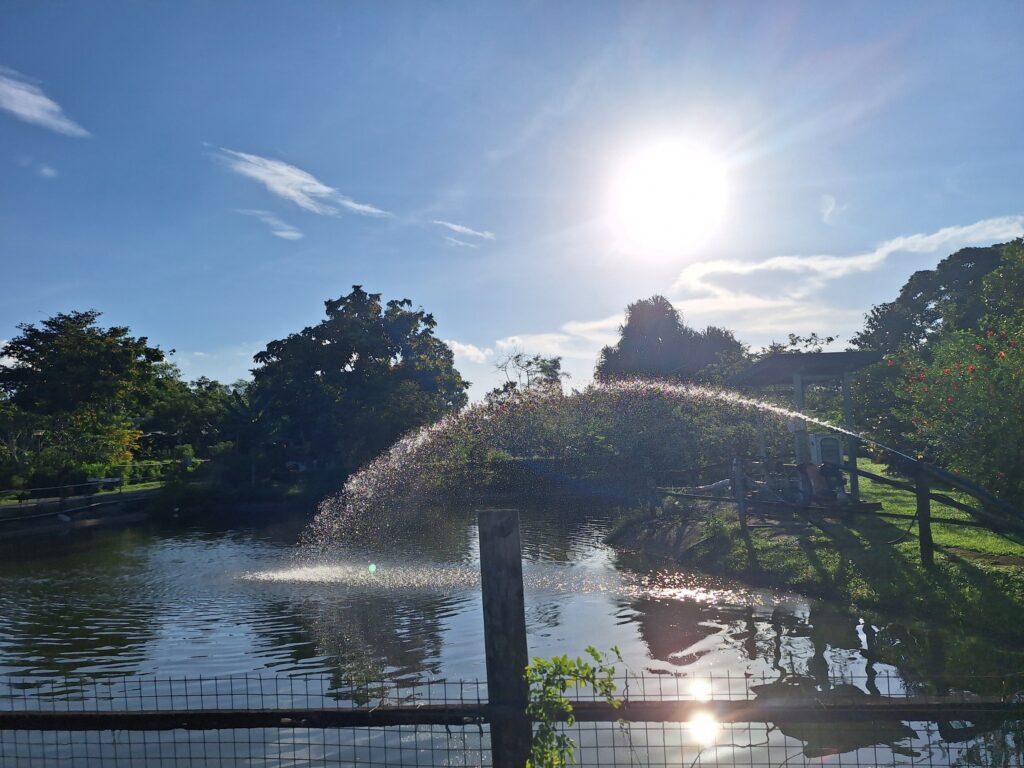
The symposium took place on 27 June at Bollywood Farms, a farm offering educational experiences allowing people to reconnect with nature. Nature lovers, authors and poets gathered to explore how writing in all its forms can foster more eco-centric perspectives.
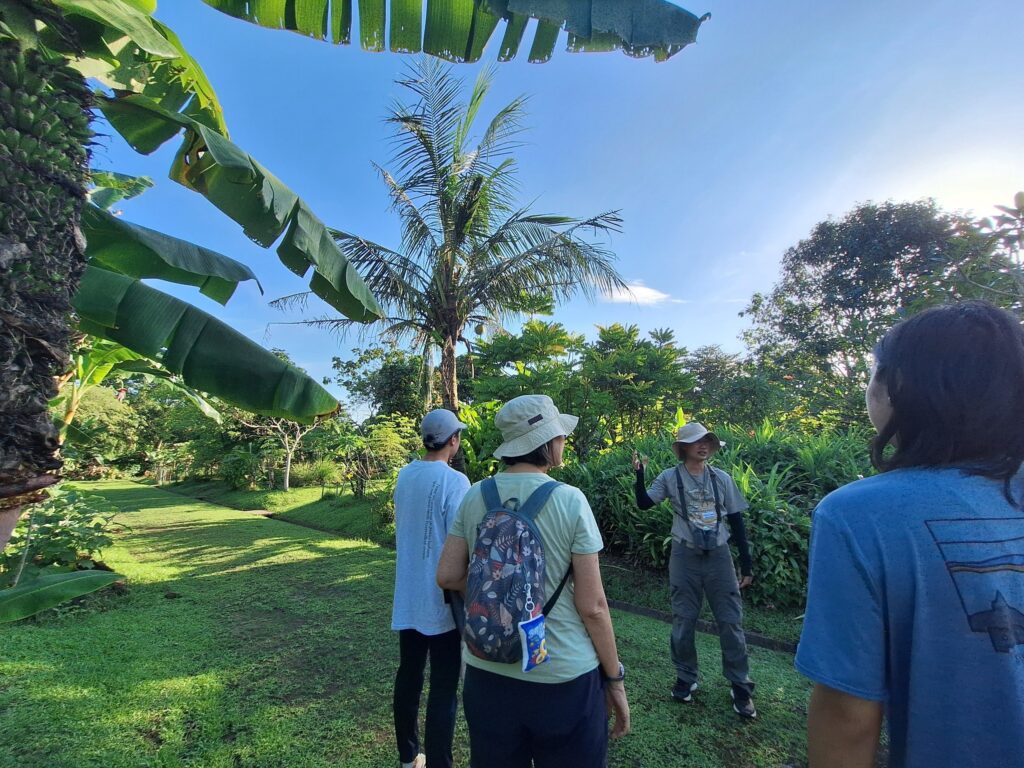
A portion of the symposium’s proceeds goes to support a habitat restoration initiative targeting a vital wildlife corridor in Malaysia. Event refreshments were plant-based and prepared from the farm’s organic produce.
Returning home through ecowriting – Esther Vincent Xueming
Esther Vincent Xueming, a 2025 Writer-in-Residence at the National Centre for Writing, opened the speaker sessions.
She is the editor-in-chief of Tiger Moth Review, a journal publishing eco-centric art and literature.
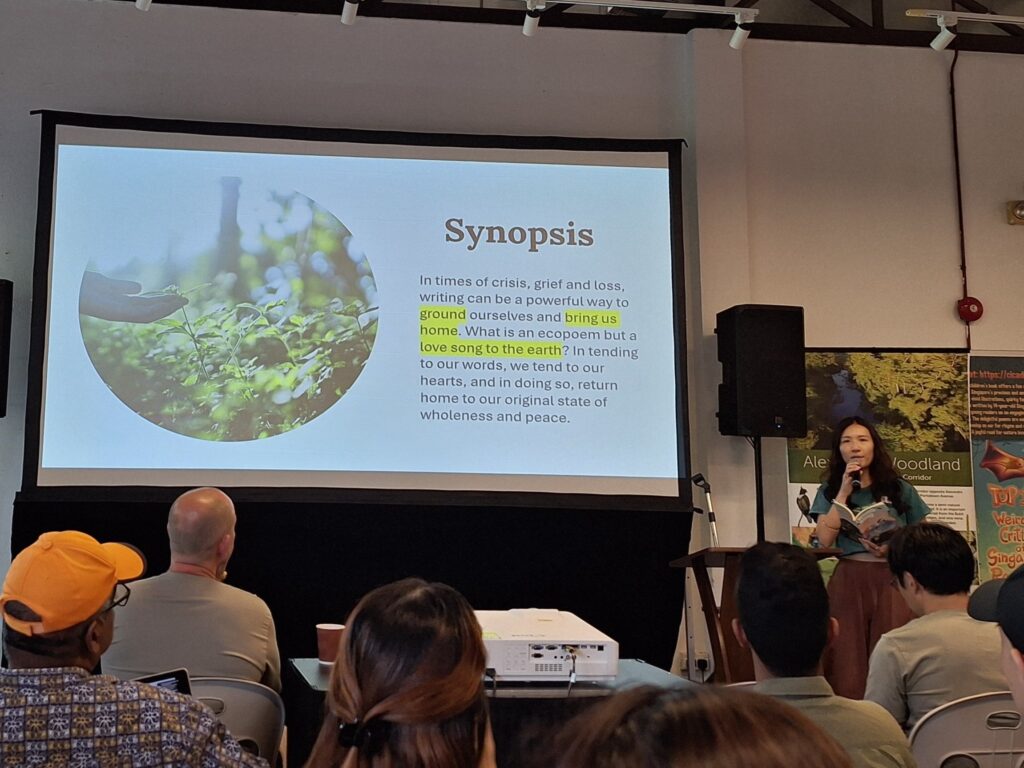
Vincent read a few poems from her nature poetry collection, womb song, where she linked her experiences with love and loss to nature.
“What is an ecopoem but a love song to the earth?” she suggested. “In tending to our words, we tend to our hearts, and in doing so, return home to our original state of wholeness and peace.”
Nature in non-fiction – Jessica Lee Chu En
Next, director and producer Jessica Lee shared the creative process behind her documentary, Secret Lives of Trees.
As climate change escalates, trees become increasingly crucial to absorbing carbon emissions and reducing the urban island heat effect. In a land-scarce city where forests continue to be cut down to prioritise socio-economic development, the documentary aims to “tell stories about trees in an entertaining way to make people care”.
The documentary turns unassuming trees into compelling protagonists with rich backstories and thrilling mysteries, making audiences invested in the lives and fates of trees.
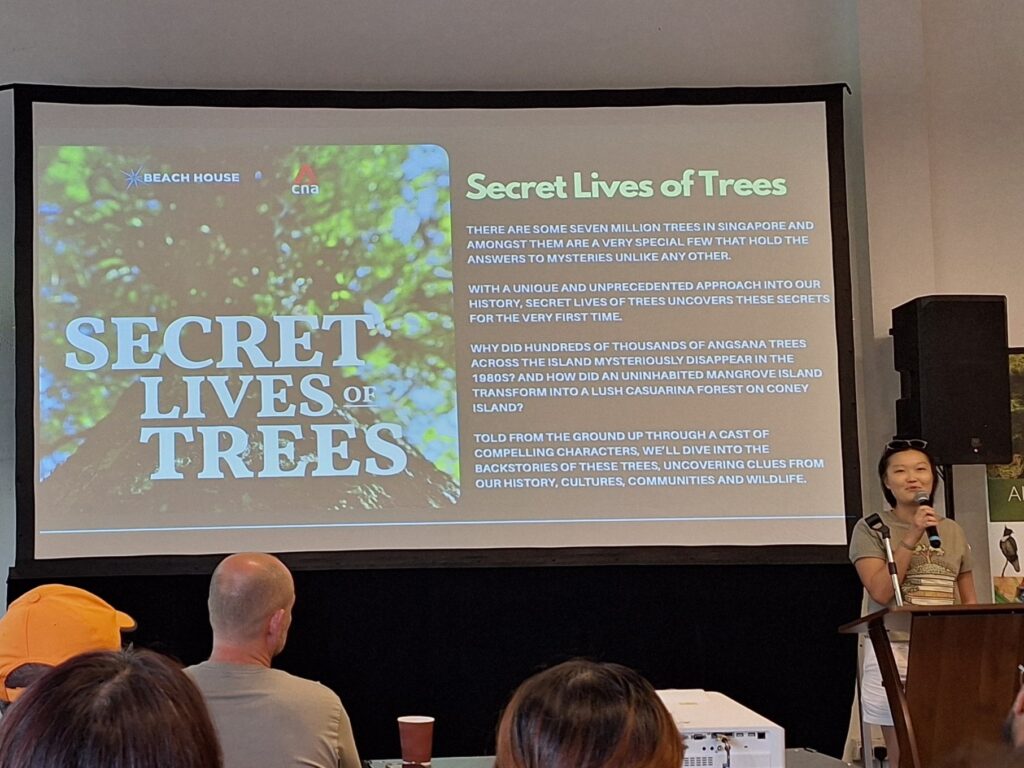
On-screen visual storytelling brings immediacy, texture and emotional resonance. It is a powerful communication tool in today’s digital age where short-form video content attracts the most eyeballs.
Lee, however, is currently working on writing a book detailing the history of trees in Singapore. Non-fiction storytelling, screen or page, has the potential to generate debate and inspire climate action.
Nature-centred poetry – BabaGabra, Clarence Eng and George Jacobs
BabaGabra is a collective that aims to preserve and promote Baba Malay, a dying language spoken by the Baba Nyonya community.
Benedict Khoo, a young representative from BabaGabra, shared how remaining in touch with his roots has brought him closer to nature.
For the Babas, nature is sacred and highly intertwined with their culture and language. Pomegranates, for example, symbolise fertility, while its leaves are used to wash oneself and cleanse bad energy after a wake.
The poetry and folk songs by Babas are proof that nature was once much closer to humans. To demonstrate this, Khoo recited a few pantuns – a Malayic oral poetic form – written in Baba Malay, weaving in elements of nature like durians and roses.
By sharing poetry, one can promote a love for the environment. “Every one of us is like a seedling, inspiring others. You can propagate positivity to the people around you and change the environment around you,” said Khoo.
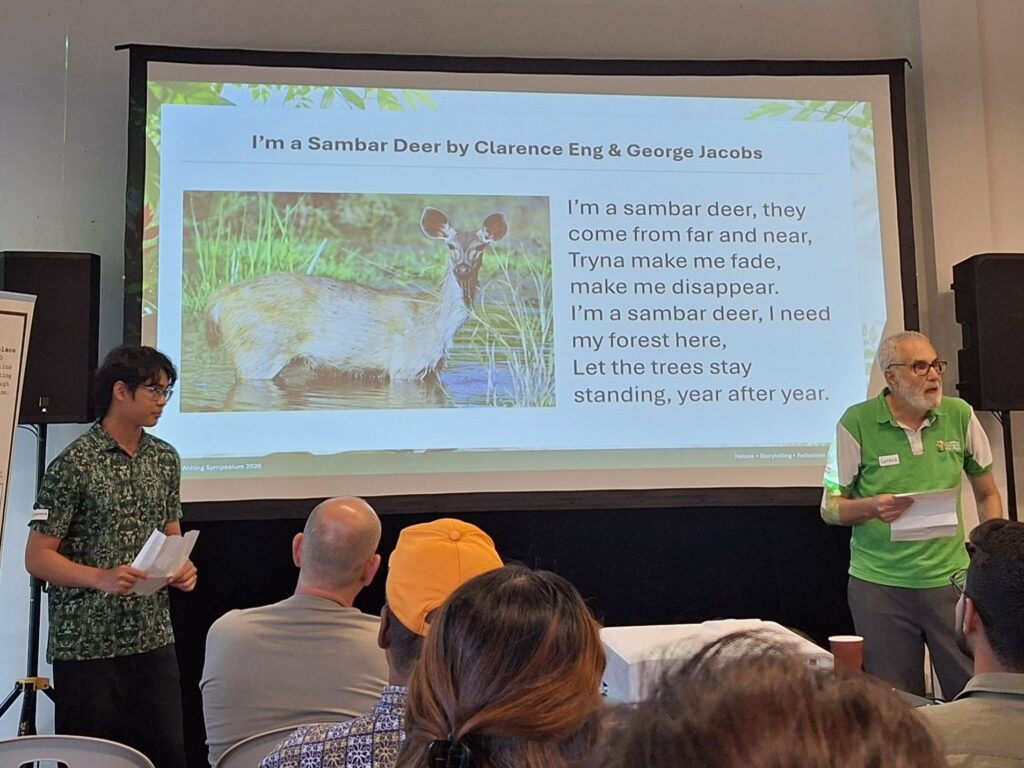
Clarence Eng and George Jacobs also performed their poem “I’m a Sambar Deer”, written in the perspective of a sambar deer, a species threatened by hunting and deforestation.
Enhancing public eco-literacy – Ng Kah Gay
Ng Kah Gay, publisher at Ethos Books, advocated for enhancing public eco-literacy.
To develop eco-literacy, people must first understand the logic of capitalist economies. Ng deconstructed the extractive mechanics behind the idiom “a bird in the hand is worth two in the bush”.
Capitalism suggests that the bird in the hand is worth more because it can be exploited. Ng discerned a similar mentality in how oil and gas companies plan to ignore climate commitments and increase extraction while they still have fossil fuels ‘in hand’.
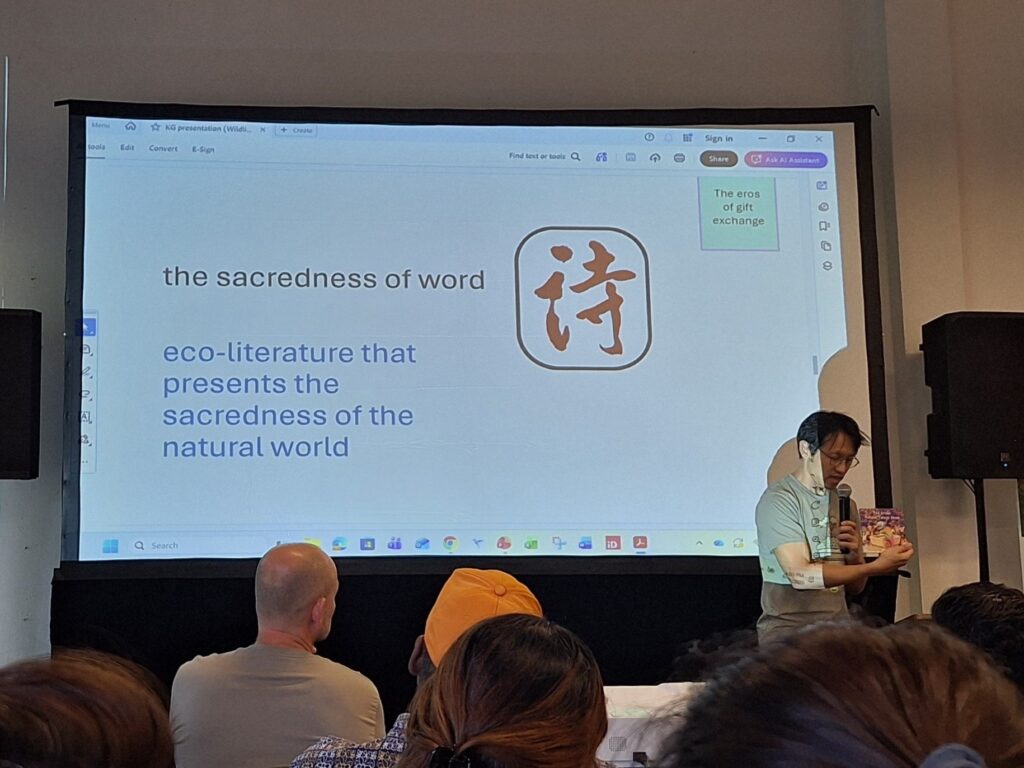
Conversely, Ethos publishes “eco-literature that presents the sacredness of the natural world”. By reading eco-literature and participating in a regenerative economy based on mutualism, people with power and resources can be mobilised to fund the environmental cause.
Ng pointed to the importance of books in education and advocacy. “For nature to survive, we need books to be valued in the market economy,” he declared.
Challenges of nature journalism – Robin Hicks
Sustainability journalist Robin Hicks discussed the challenges of reporting on environmental issues in Singapore.
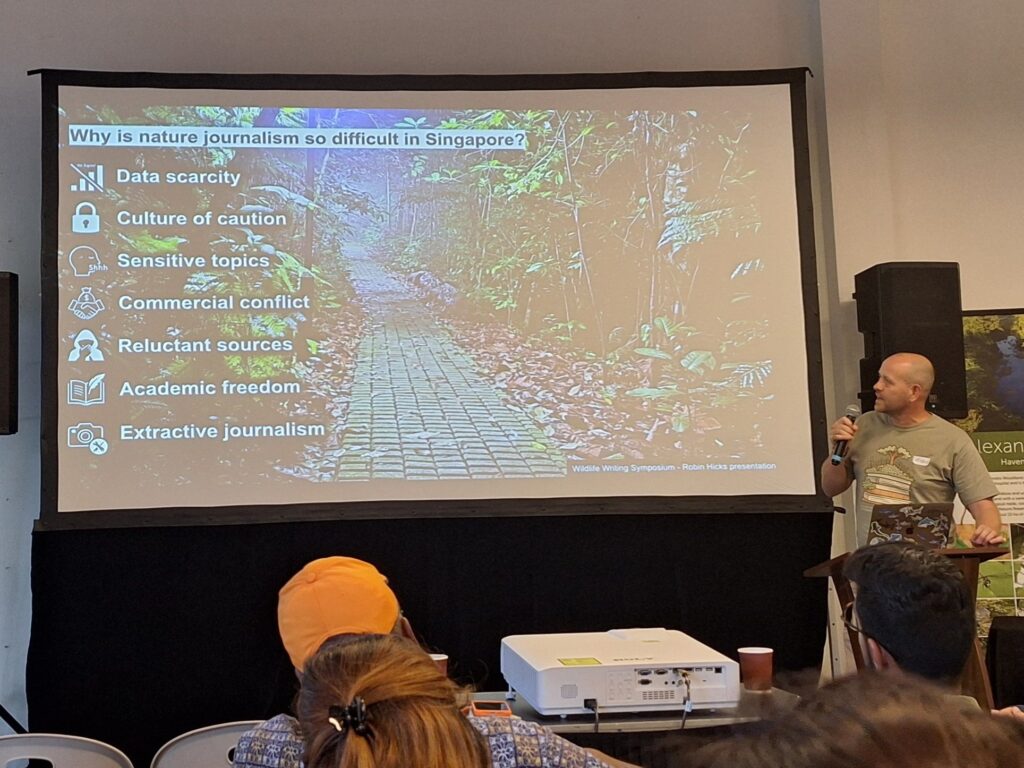
Data scarcity, reluctant sources, and a lack of academic freedom can make it difficult to gather substantial information for reporting.
Journalists self-censor and skirt sensitive topics, perpetuating a culture of caution where critiquing policy decisions is discouraged.
Hicks cautioned against extractive journalism, where journalists report stories without considering the impact on the featured communities.
Still, nature journalism is important in holding companies, elites and the government accountable to their treatment of the environment.
Blogging for nature advocacy – Sivasothi N.
Educator and conservationist Sivasothi N. shared how blogging can educate the public about nature and environmental issues.
Blogs, he suggested, provide searchable repositories of observations and ideas which help deepen eco-literacy among researchers, students, practitioners and the public.
He presented real-life examples of how blogging raised public interest about environmental issues and communicated concerns to the government.
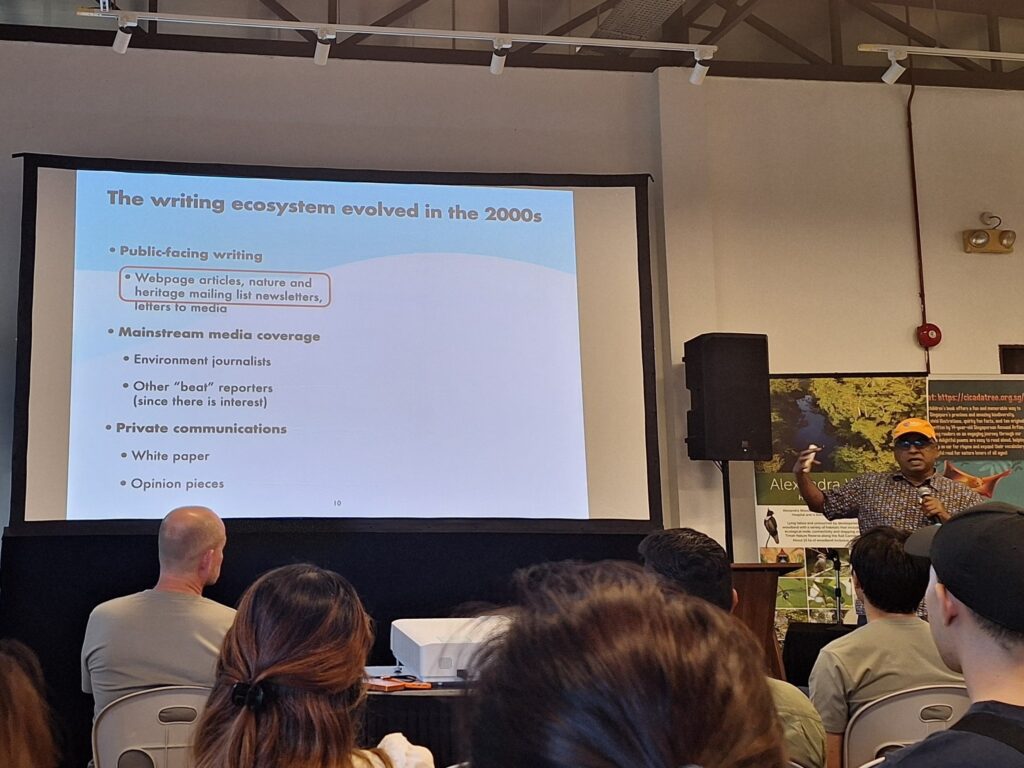
Other than blogs, platforms like traditional media outlets, social media, and online news portals can fuel collaborative discussions of environmental issues.
Whether one communicates best with blogs, articles, poems, prose, non-fiction or videos, everyone can play a part in advocating for the environment.
End
The Wildlife Writing Symposium 2026 was organised by Cicada Tree Eco-Place in partnership with Bollywood Farms on 27 June 2026.