Category: Books

Book Launch: Top 10 Weirdest Critters of Singapore’s Rainforest

A Celebration of Youth, Creativity & Biodiversity

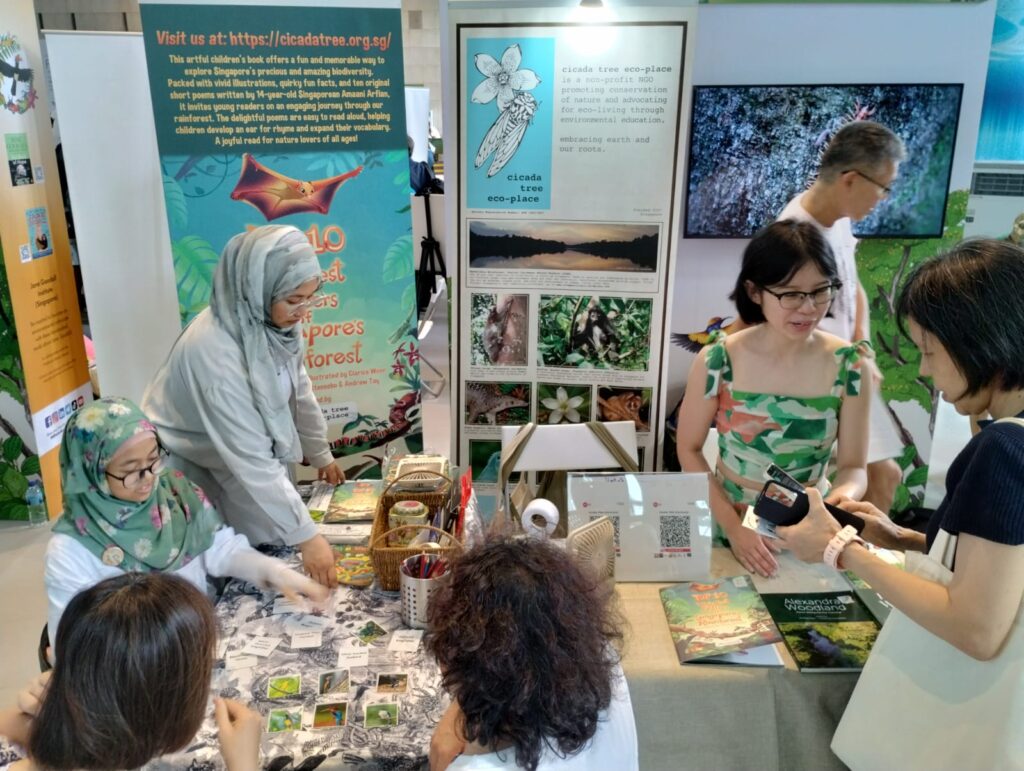
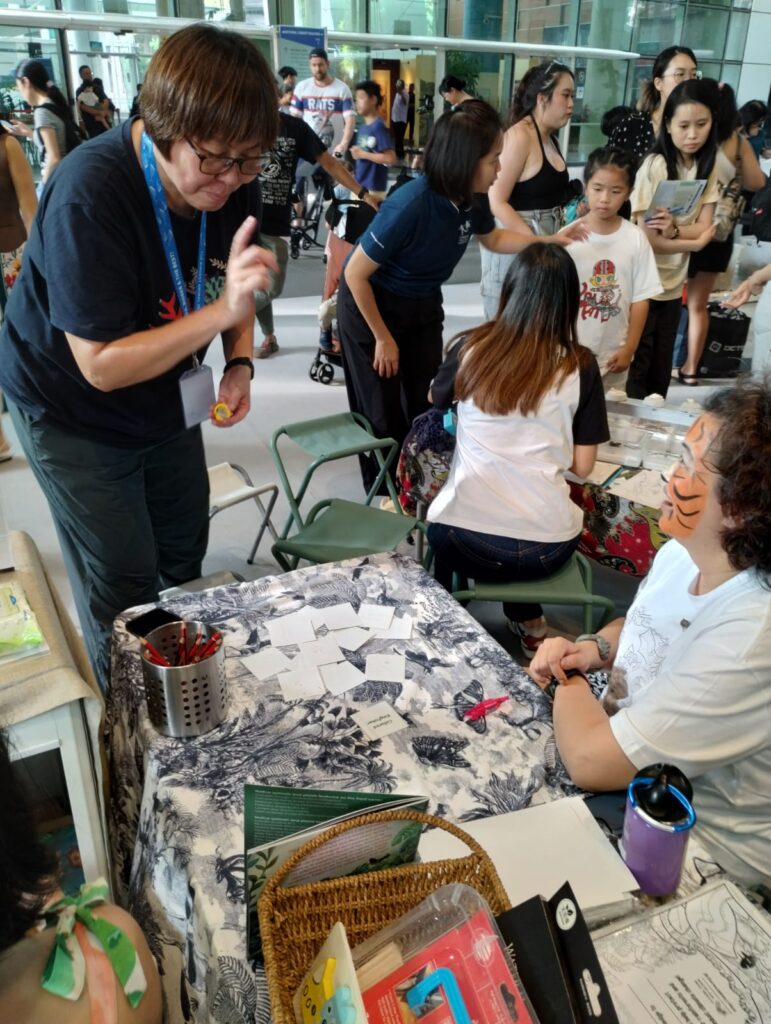
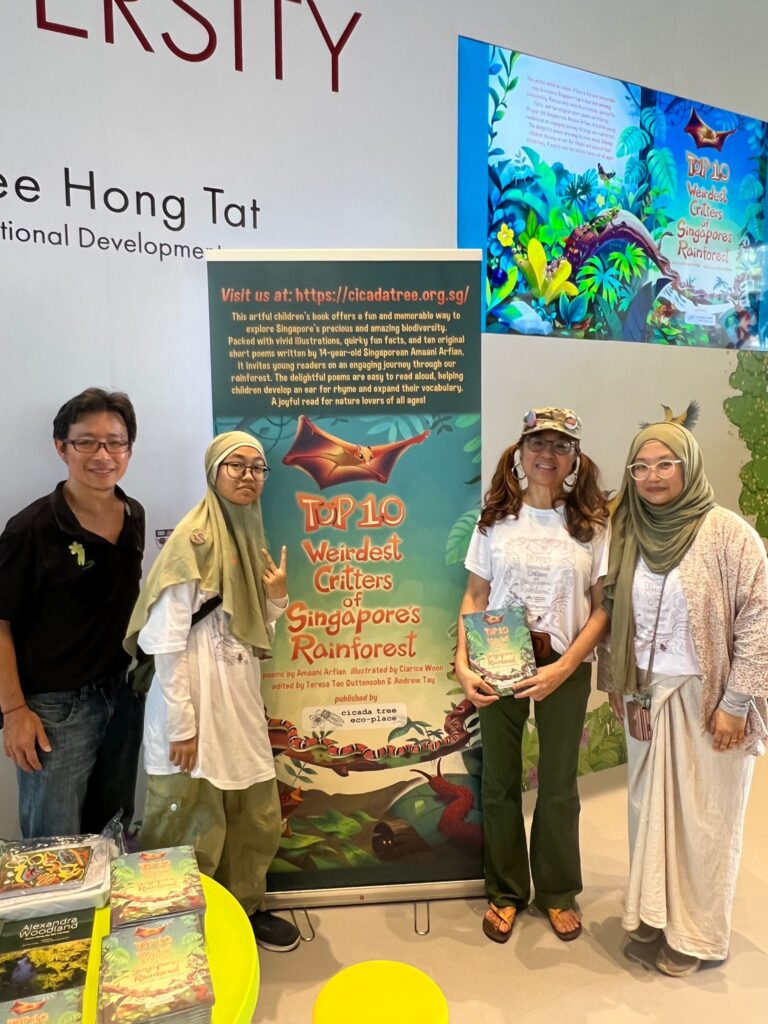
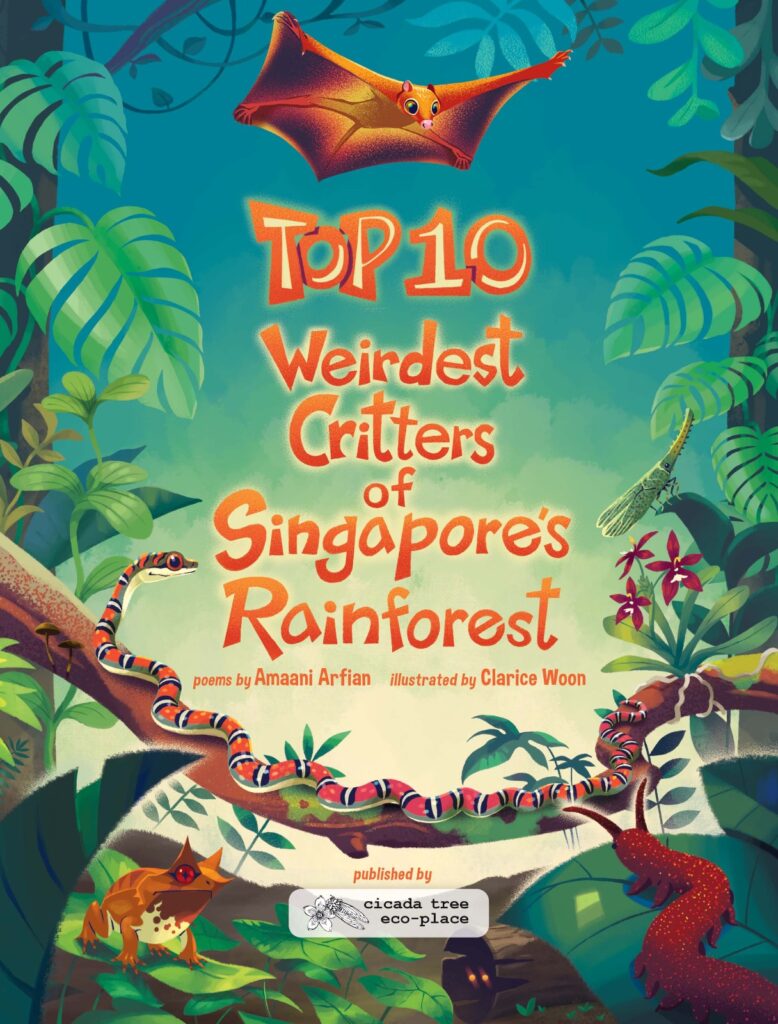
Cicada Tree Eco-Place proudly presents Top 10 Weirdest Critters of Singapore’s Rainforest, officially launched on 31 May and 1 June 2025 during the Festival of Biodiversity at the National Library Building.

We are thrilled to share that our new children’s book has reached The Straits Times Top 10 Bestsellers list!
Featured in the ST Weekly Bestsellers (June 14):
https://www.straitstimes.com/life/arts/the-straits-times-weekly-bestsellers-may-174

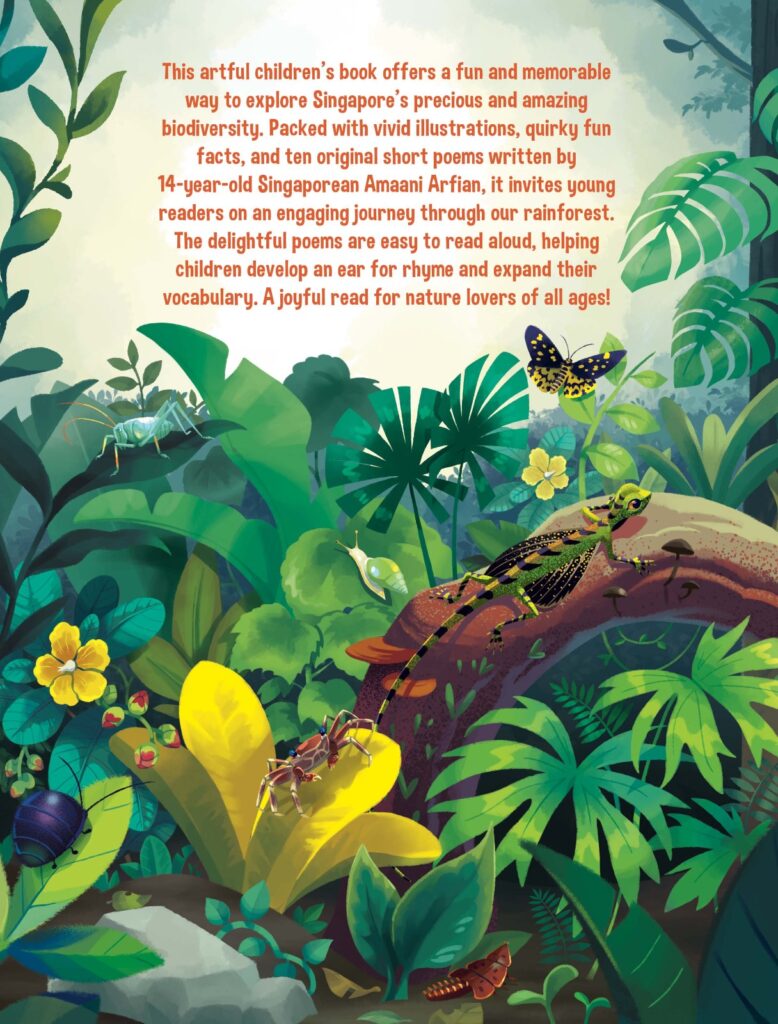
This vibrant, eco-conscious children’s book invites readers of all ages to rediscover Singapore’s wild side packed with vivid illustrations, quirky fun facts, and ten original short poems that bring our rainforest’s most unusual creatures to life.

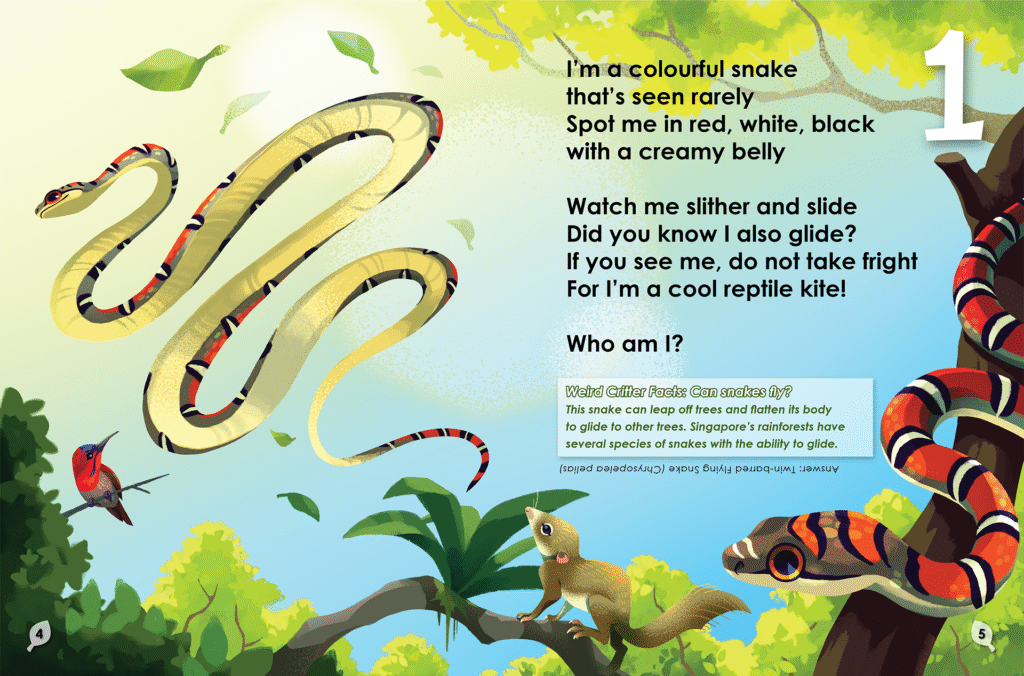
Written by 14-year-old student volunteer Amaani Arfian and illustrated by Clarice Woon, Top 10 Weirdest Critters of Singapore’s Rainforest introduces ten of Singapore’s strangest rainforest creatures, from the flying snakes to the Pill Cockroach and Ant-pilling Assassin Bug through short, witty poems that make learning about nature fun and accessible.

Edited by Teresa Teo Guttensohn and Andrew Tay, Co-founders of Cicada Tree Eco-Place, the book encourages children to look beyond appearances and discover the wonder in every living thing.

Printed locally on Enviro Wove 100% recycled paper, the book embodies CTEP’s commitment to sustainability and responsible publishing.

“Every creature, no matter how small or strange, plays a vital role in keeping our rainforest alive.”
Andrew Tay, Editor & Co-founder of Cicada Tree Eco-Place

Children are Singapore’s next generation of nature stewards. Through art and words, we hope to nurture love for our last wild places.”
Teresa Teo Guttensohn, Editor & Co-founder of Cicada Tree Eco-Place

This publication marks Amaani’s debut as a young writer and celebrates the growing movement of youth who use creativity to protect the planet.

The project came to life through the dedication of volunteers Brice Li, Radiah Rizal, Rominia Leonard, and Tia Andrea Guttensohn, who contributed to every stage of its development from proofreading and content support to logistics and event coordination.
Together, they transformed curiosity into action, showing how community spirit and creativity can bring nature education to life.

At the Festival of Biodiversity 2025, visitors were treated to a special launch offer each copy of the book was available for just $10. Supporters of the Singapore Wildcat Action Group (SWAG) also received a complimentary copy with every purchase of three CTEP titles.
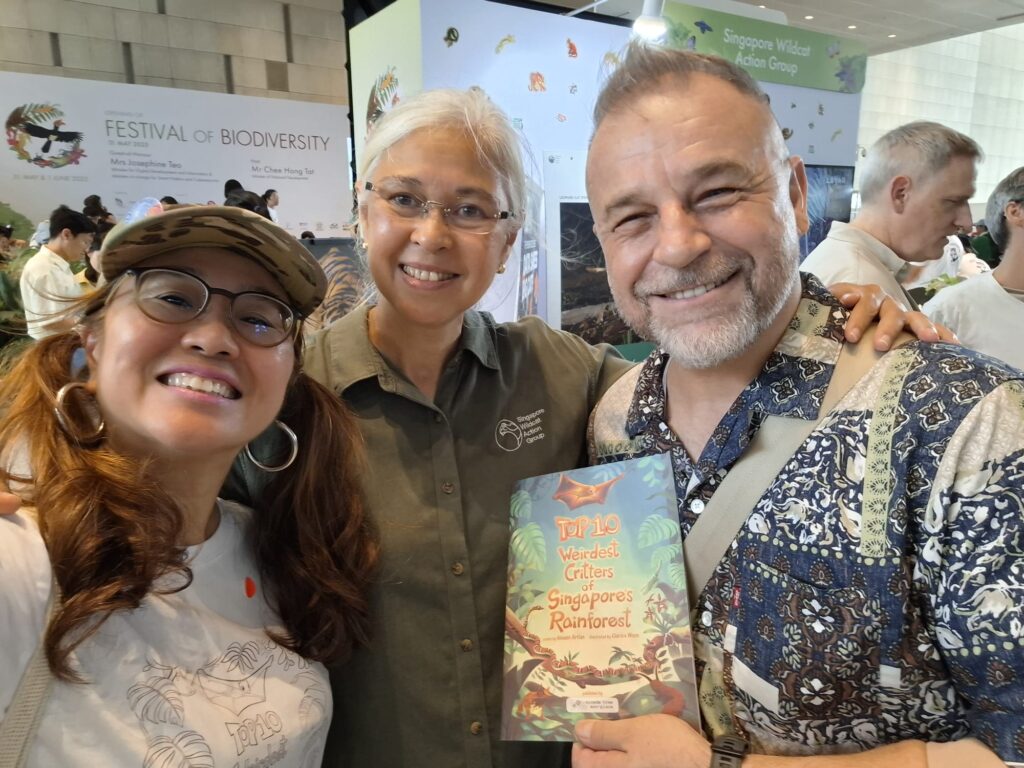
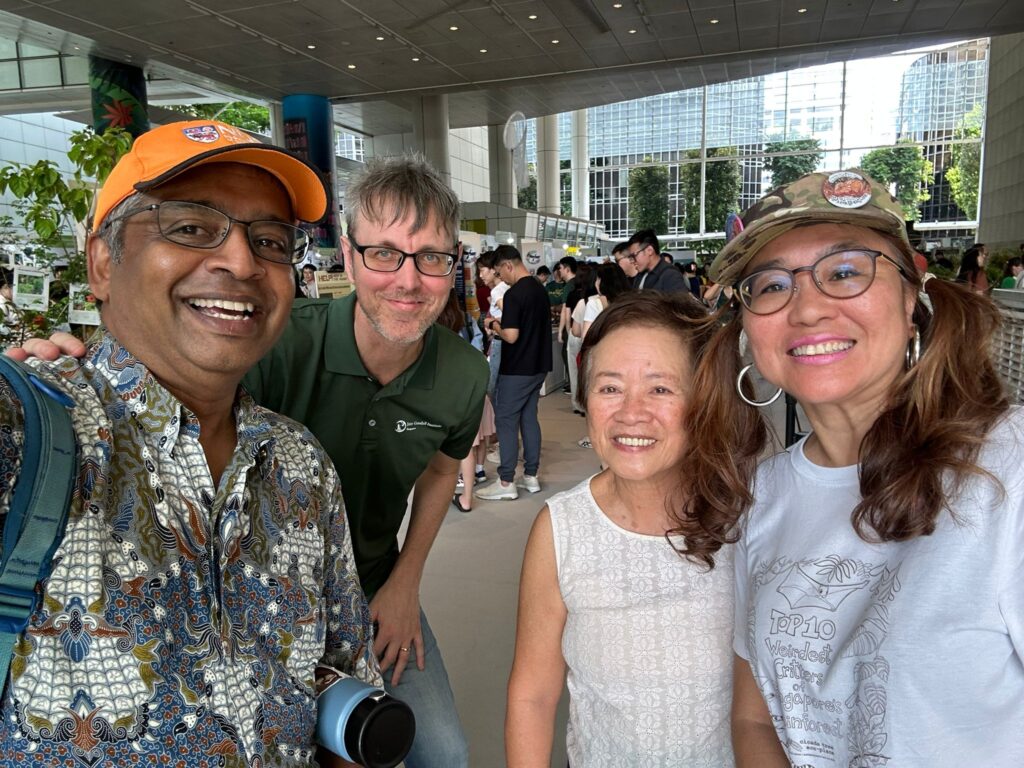
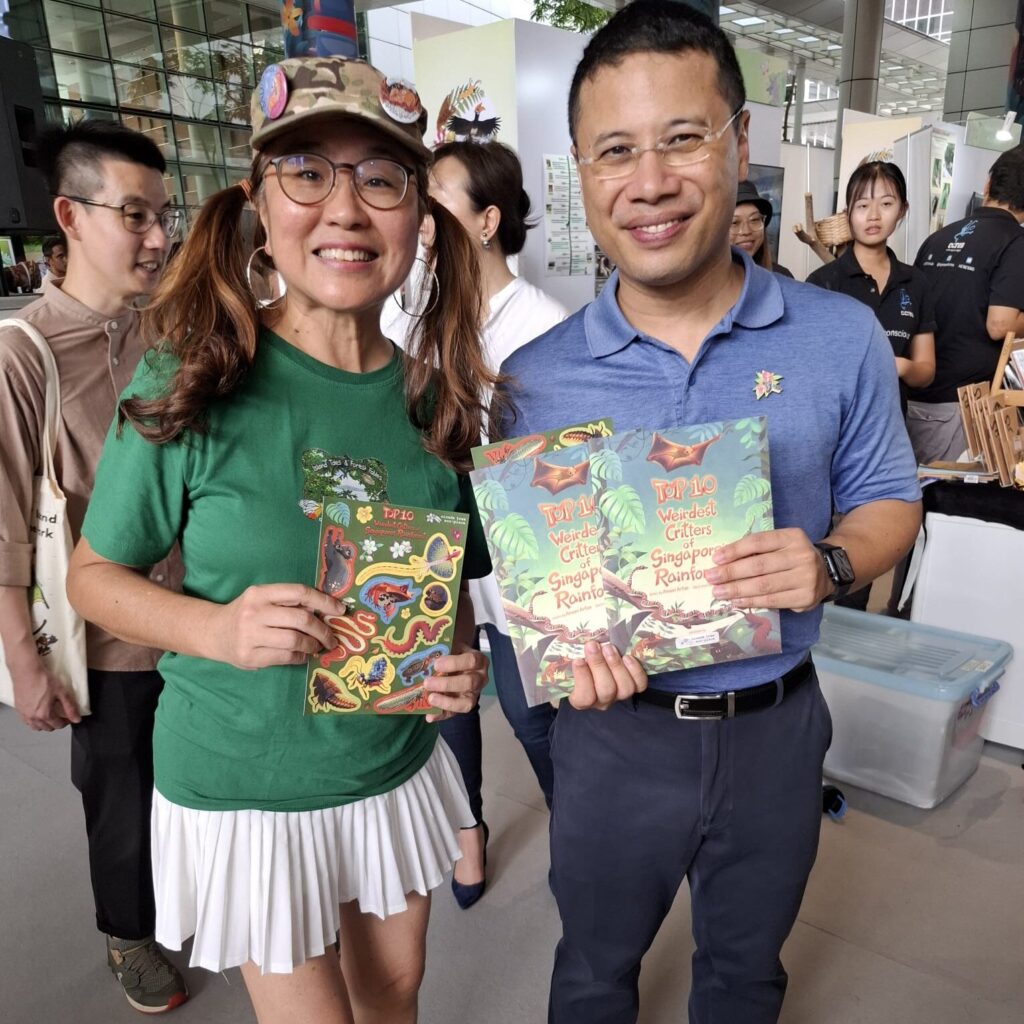
The booth welcomed many guests, including Minister Desmond Lee, who was presented with a copy of the book in appreciation of his ongoing support for biodiversity conservation and environmental education in Singapore.

See more moments from the launch and behind-the-scenes highlights on our Facebook page.

Proceeds from Top 10 Weirdest Critters of Singapore’s Rainforest support Cicada Tree Eco-Place’s programmes that teach children and families about local wildlife, rainforest conservation, and climate action.

By choosing recycled paper and featuring youth voices, the book reflects Cicada Tree Eco-Place’s belief that education and sustainability go hand in hand, proving that small creative acts can make a big impact.
Join Us in nurturing the next generation of nature stewards.

Your support helps us continue creating meaningful, youth-led environmental projects that inspire wonder and care for our planet.

Stay connected and visit our website and follow us on social media for more updates on upcoming projects and book launches.

Top 10 Weirdest Critters of Singapore’s Rainforest is now available at Kinokuniya, BookBar SG, and Wardah Books.
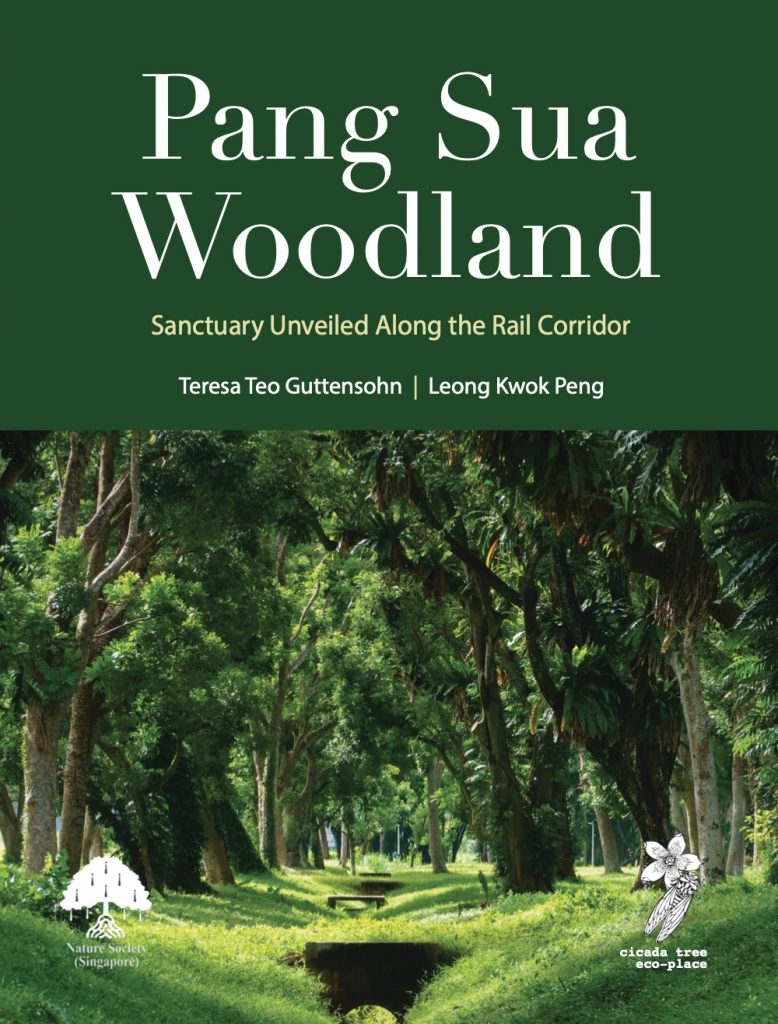
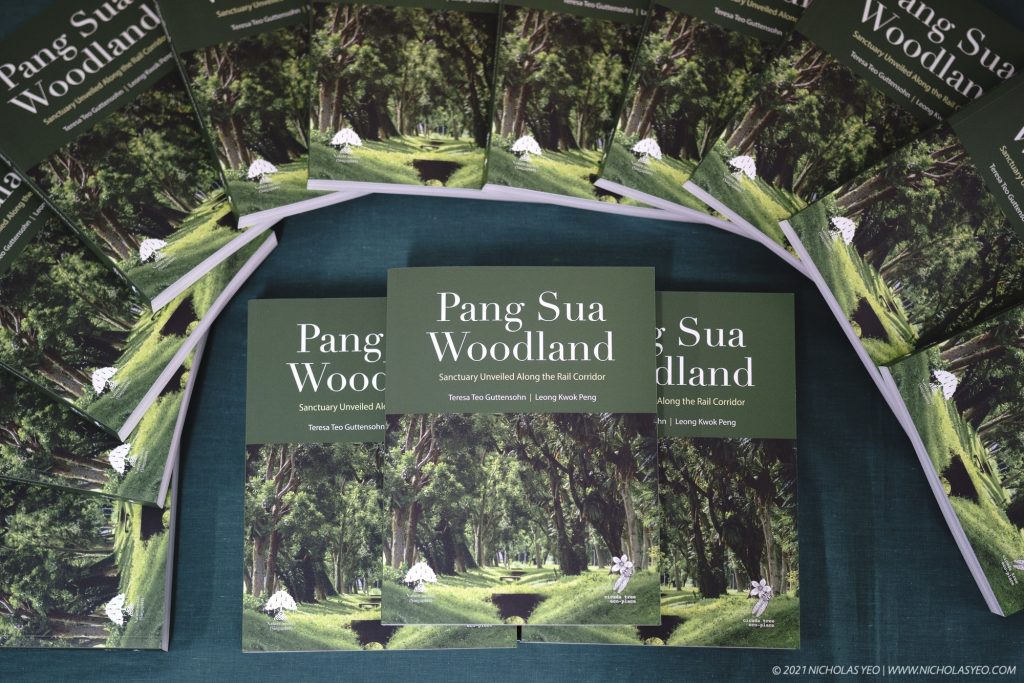
Pang Sua Woodland: Sanctuary Unveiled Along the Rail Corridor

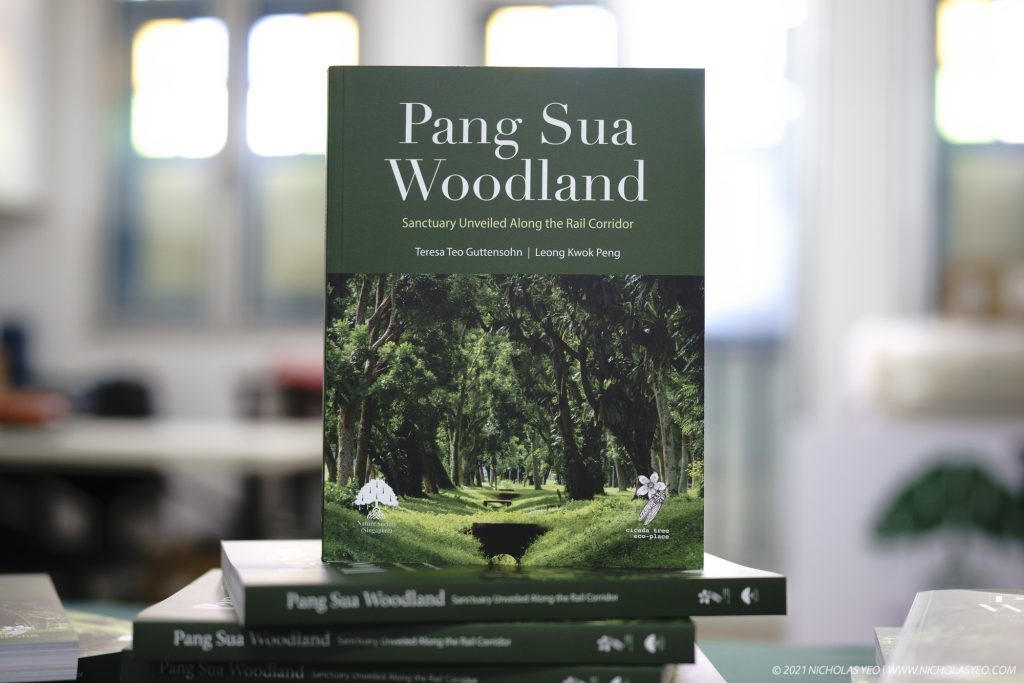
Pang Sua Woodland: Sanctuary Unveiled Along the Rail Corridor (2021) Cicada Tree Eco-Place & Nature Society Singapore. COVER PHOTO: Nicholas Yeo

Book Launch: “Pang Sua Woodland: Sanctuary Unveiled Along the Rail Corridor”

Cicada Tree Eco-Place (CTEP) and Nature Society (Singapore) (NSS) are pleased to announce the launch of the book “Pang Sua Woodland: Sanctuary Unveiled Along the Rail Corridor”.

“Pang Sua Woodland: Sanctuary Unveiled Along the Rail Corridor” is a labour of love by volunteers of Cicada Tree Eco-Place and Nature Society (Singapore). Both organisations are ‘Friends of Rail Corridor’.

The book was inspired by NSS’ publication “The Green Rail Corridor” (2019) and is a collaboration between the two non-profit, non-governmental organisations dedicated to nature appreciation, education and natural heritage conservation.

Nestled between housing estates in Choa Chu Kang and Bukit Panjang, Pang Sua Woodland is unassuming at first glance. Yet, this green oasis is a critical lifeline for both people and wildlife and should be preserved.

The woodland is a microcosm of Singapore and the world at large. Conserving small pockets of precious biodiversity and wild greenery is critical to solving the existential crisis facing all of humanity.

The book proposes for the conservation and protection of the woodland from urban development. By rewilding the woodland and naturalising Sungei Pang Sua, the forest would be reimagined as a permanent public park with a natural winding stream, marshy ponds and community orchards.

An important conduit for wildlife dispersal, the park would form an eco-link between Kranji Woodland and Bukit Mandai Forest in the north, Pang Sua Pond wetland in the east, as well as Bukit Gombak Forest and Bukit Timah Nature Reserve. This park would also preserve the rural heritage of Bukit Panjang.

“COVID-19 has revealed the profound impact of a pandemic in an intensely concentrated and connected world. In Singapore and elsewhere, people find themselves realising how deeply interconnected humans are with each other and with nature,” said book editor Teresa Teo Guttensohn, Co-founder and Ex-President of Cicada Tree Eco-Place.

Guttensohn added: “Even as we rush to plant native tree saplings, what is critically needed in tandem is to halt the relentless whittling away of our last remaining precious forest fragments for urbanisation. Once lost, Pang Sua Woodland cannot be replaced. Regretfully, the area is slated for residential development when, instead, it should be protected and preserved.”

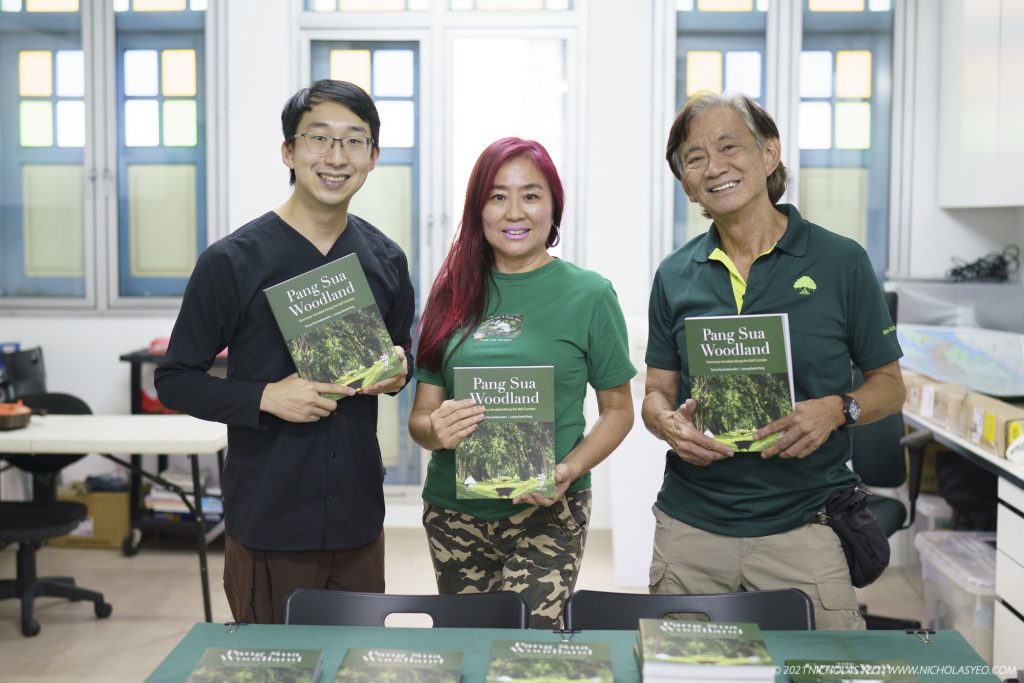
Editorial team members Teresa Teo Guttensohn (centre), Leong Kwok Peng (right) and Nicholas Yeo.

Nature – our life support system – is itself on life support. We must therefore protect every last remaining unprotected forest and wild greenery. Stemming ecosystem loss is a nature-based solution which will strengthen climate, ecological and social resilience in a post-pandemic world.

BOOK EDITORIAL TEAM

Pang Sua Woodland is highly accessible and therefore ideal to educate kids and students in the neighbouring estates about our native fauna. Community surveys of the woodland show how it is an important habitat and conduit for animals which include Otters, Civets, Spotted Wood Owls and Changeable Hawk-eagles, among others.

“The railway land is a ready-made nature corridor, recreational space and eco-friendly transport route all rolled into one. It is a valuable piece of ecological and historical heritage that should be kept for future generations of Singaporeans,” said Leong Kwok Peng, a co-editor and Conservation Committee Chair at Nature Society (Singapore).

Leong added: “Many members of the public enjoy the rustic nature of the Rail Corridor, There, one is transported back in time and gets the feeling that you are not in Singapore. Further urbanisation there would diminish its ecological function and scenic value — without which the Rail Corridor would lose much of its charm and magic.”

The book unveils a sanctuary hidden in plain sight along the northern stretch of the Rail Corridor, documented in beautiful prose and vibrant photography by volunteers.

Connecting past and present, the book also documents the rich heritage and communities of Bukit Panjang, articulating a biophilic vision for its development as a space for recreation and green connectivity.


Purchase

The book is presently stocked at Books Kinokuniya, Book Bar at 57 Duxton Road, Grassroots Book Room, Nature Society Singapore & Bollywood Farms. To buy online, you may order a copy from Books Kinokuniya using the button below:

For distribution enquiries, please contact us.

Media

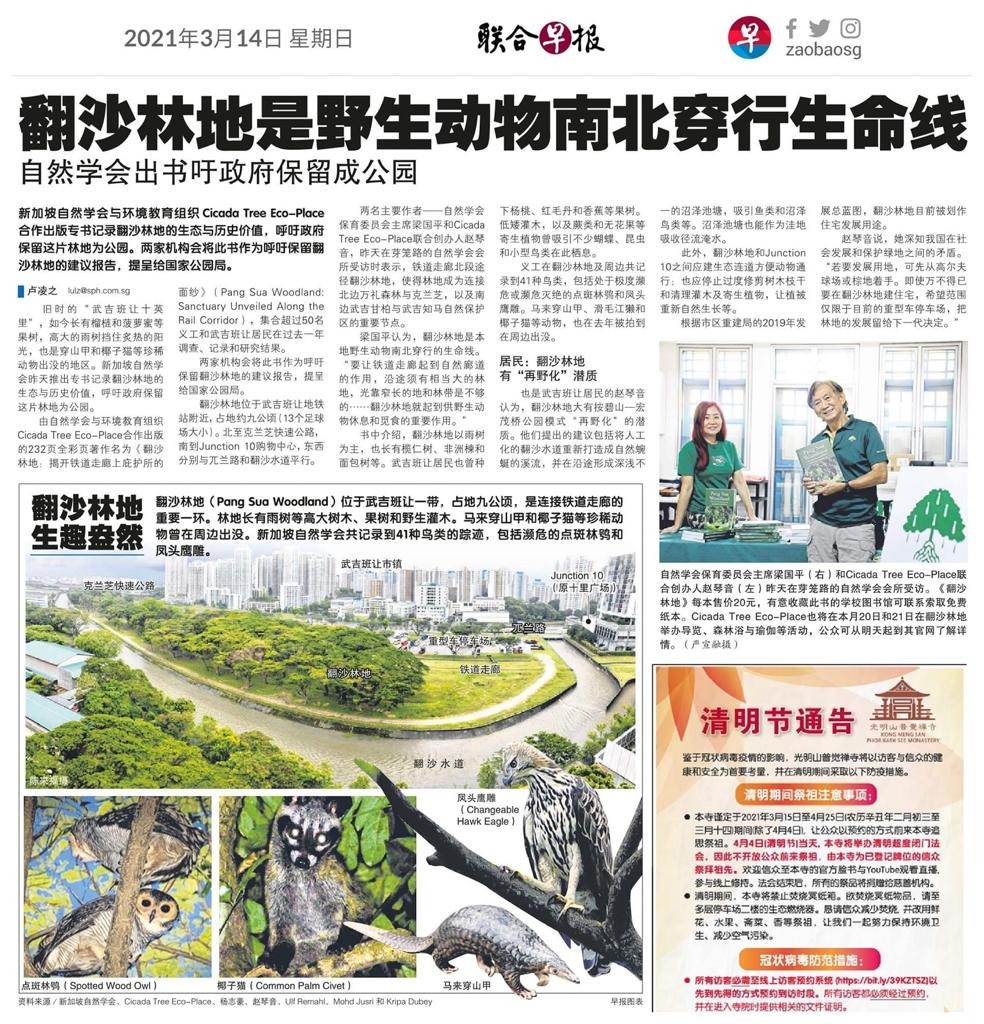
Coverage of the book and rich fauna at Pang Sua Woodland in Lianhe Zaobao, Sunday 14 March 2021.

A Case for the Rewilding of Sungei Pang Sua: A Lesser-known Oasis – Ming En Liew, The Home Ground (23 March, 2021)

TheHomeGround joins Andrew Tay, a licensed nature guide, on a walk at Pang Sua, to catch a glimpse of what makes this land so special.


Re-opening of Rail Corridor (Central) and Tree Planting by NParks and Friends of the Rail Corridor

Photo: Minister Desmond Lee on Facebook

A 4-kilometre stretch of the Rail Corridor (Central) was re-opened at an event on Monday, 22 March 2021 by Minister Desmond Lee and Friends of the Rail Corridor.

The stretch was closed for refurbishment works, including the addition of extra access points, improved trails and natural landscape re-wilding.

“When fully re-opened in end-2022, it will be a seamless green corridor from Woodlands Road in the north, to Tanjong Pagar in the south,” said Minister Lee.

The groups which attended included Cicada Tree Eco-Place, NSS, SHS, BES Drongos, and the occasion was marked by a tree planting.

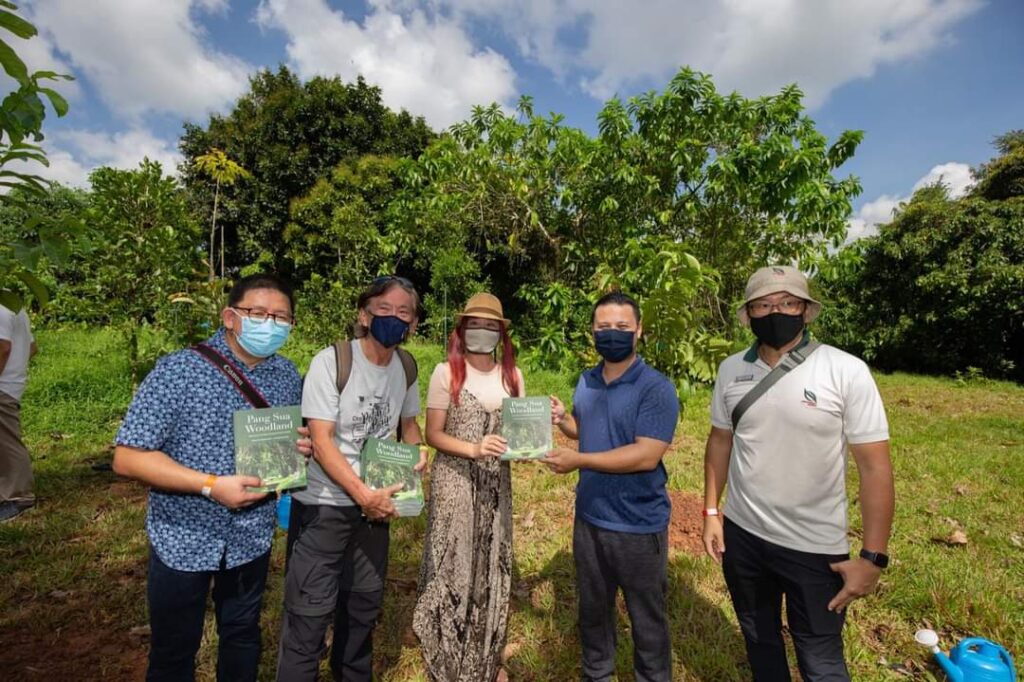
Teresa Teo Guttensohn of Cicada Tree Eco-Place and Leong Kwok Peng of Nature Society (Singapore) presented signed copies of the book “Pang Sua Woodland: Sanctuary Unveiled Along the Rail Corridor” to Minister Desmond Lee after the event.

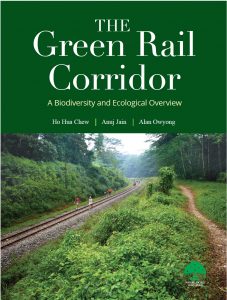
The Green Rail Corridor – A Biodiversity and Ecological Overview

by Ho Hua Chew, Anuj Jain & Alan Owyong

(ISBN: 978-981-14-3051-0)

Recommended reading:

This timely conservation book records with photos from above of the last remaining precious forest patches along the longest green corridor (24km) in Singapore, once a historic main Railway line to Peninsular Malaysia and branch line to Jurong.

See the Maps and discover the ecological and biodiversity importance of this long and narrow lifeline for local wildlife and communities.

Green gems like the little known river, Sungei Pang Sua, and its adjacent charming Woodland is home to many species of birds. Rare flora such as formerly presumed nationally extinct plants and rare fauna, such as the endangered Grey-headed Fish Eagle (Ichthyophaga ichthyaetus) and Violet Cuckoo (Chrysococcyx xanthorhynchus) have been recorded at Clementi Forest.

Find out why these last wilderness pockets should be conserved. The authors advocate a robust plan for the conservation and enhancement of the ecological connectivity of the Rail Corridor which is a priceless natural and historical-cultural heritage.

Where to get a copy: Order online from Nature Society (Singapore) at price of $28 (inclusive of local postage charges for mail order in Singapore)

Cicada Tree Eco-Place is a supporting partner of the ‘Friends of the Rail Corridor’ group.


Mid-Autumn Bat Moon Walk 2018
National Day Walk 2019 @ Singapore Quarry
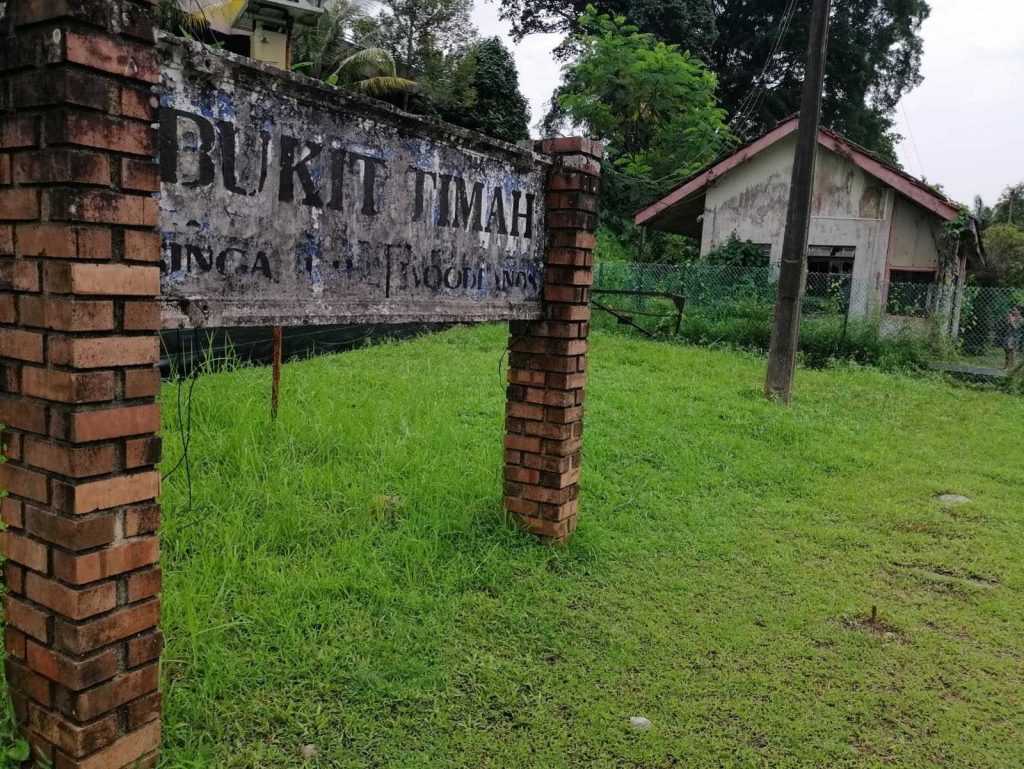
Community Nature Walk 2019 @ Bukit Timah Station

Powered by WordPress & Theme by Anders Norén