The Housing Development Board (HDB) is seeking public feedback following the release of an environmental study for a proposed HDB residential development at Choa Chu Kang N1, also known as Pang Sua Woodland.

Cicada Tree Eco-Place (CTEP) and Nature Society (Singapore) (NSS) launched the book “Pang Sua Woodland: Sanctuary Unveiled Along the Rail Corridor” in 2021 to document the rich biodiversity of the area.
The book proposes for the conservation and protection of the woodland from urban development. By rewilding the woodland and naturalising Sungei Pang Sua, the forest would be reimagined as a permanent public park with a natural winding stream, marshy ponds and community orchards.
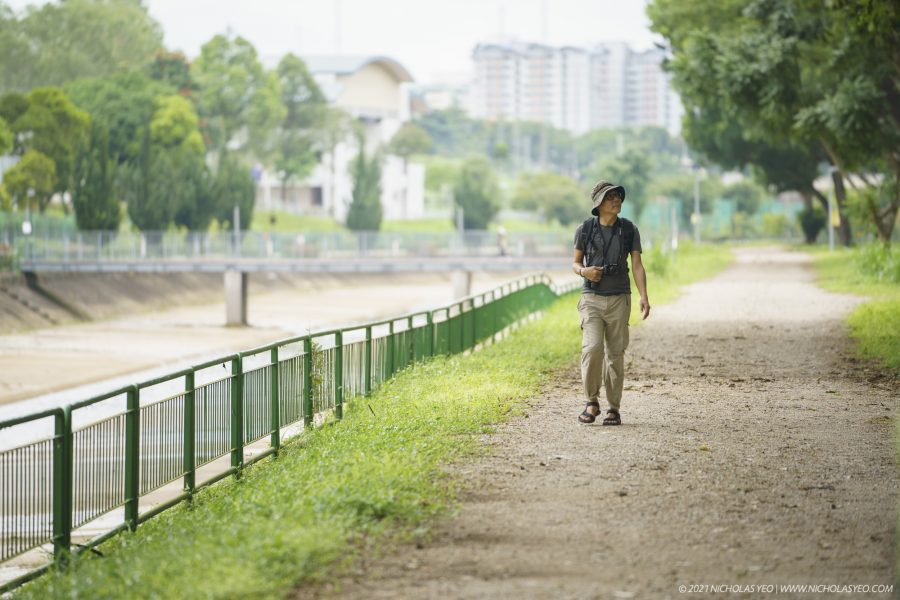
Nestled between housing estates in Choa Chu Kang and Bukit Panjang, Pang Sua Woodland is unassuming at first glance. Yet, this green oasis is a critical lifeline for both people and wildlife and should be preserved.
An important conduit for wildlife dispersal, the park would form an eco-link between Kranji Woodland and Bukit Mandai Forest in the north, Pang Sua Pond wetland in the east, as well as Bukit Gombak Forest and Bukit Timah Nature Reserve. This park would also preserve the rural heritage of Bukit Panjang.


“COVID-19 has revealed the profound impact of a pandemic in an intensely concentrated and connected world. In Singapore and elsewhere, people find themselves realising how deeply interconnected humans are with each other and with nature.”
Teresa Teo Guttensohn, Co-founder and Ex-President of Cicada Tree Eco-Place, EDITOR OF PANGSUA WOODLAND: SANCTUARY UNVEILED ALONG THE RAIL CORRIDOR
Guttensohn added: “Even as we rush to plant native tree saplings, what is critically needed in tandem is to halt the relentless whittling away of our last remaining precious forest fragments for urbanisation. Once lost, Pang Sua Woodland cannot be replaced. Regretfully, the area is slated for residential development when, instead, it should be protected and preserved.”
The woodland is a microcosm of Singapore and the world at large. Conserving small pockets of precious biodiversity and wild greenery is critical to solving the existential crisis facing all of humanity.
Please use this form to send feedback to HDB about the planned development:

Pang Sua Woodland to be developed for housing, nature groups want it kept as park – Straits Times, 16 April 2022
SINGAPORE – A green corridor should be established beside a housing development when an existing woodland in Choa Chu Kang is developed, to preserve the site’s links to other nature areas.
This is a key recommendation from an environmental study commissioned by the Housing Board and published for public feedback on April 5.
Under scrutiny by a team from infrastructure consulting firm Aecom was a site of about 21.7ha, bounded by Kranji Expressway to its north, Woodlands Road to the east, and Pang Sua Canal to its west and south.
About 15ha of the study area is known as Pang Sua Woodland, comprising managed vegetation of planted trees and grass. The remainder of the studied site includes a stretch of the canal, as well as a heavy vehicle park and a defunct bus terminal, which has been demolished and is now covered in grass.
Nature groups are advocating for the woodland, which is part of the 24km-long Rail Corridor, to be safeguarded as a green space for recreational and ecological purposes instead of being developed.
The woodland, however, is zoned “Residential (Subject to Detailed Planning)” in the Urban Redevelopment Authority’s (URA) master plan. URA’s website says its proposed use will see “high-density housing integrated with the lush greenery of the Rail Corridor and a revitalised Pang Sua Canal”.
Last year, two nature groups – Nature Society (Singapore) and Cicada Tree Eco-Place – jointly published a book on Pang Sua Woodland, in which they proposed for it to be retained as a public park.
Among their ideas was rewilding the woodland, including undergrowth – previously found on the woodland but cleared in recent years – to provide habitats for wildlife. They also proposed that the stretch of Pang Sua Canal adjacent to the woodland be naturalised to create riverine habitats.
Nature Society (Singapore) vice-president Leong Kwok Peng, who co-edited the book, told The Straits Times on Wednesday (April 13) that the woodland, despite its small size, is important for wildlife connectivity and a green refuge for these animals.
As it lies amid an extended stretch of the green corridor that has few trees, the woodland also provides valuable shade from the sun for the corridor’s users, said Mr Leong.
The next forested area to the north is about 3.8km away in Kranji, while to its south, vegetation gets more dense only about 1.8km away in Hillview.
The HDB-commissioned study found 87 large trees, with girths of 3m to 5.4m, in Pang Sua Woodland. These included raintrees and angsanas.
Citing the 2021 book by the nature groups, the study said that the woodland could facilitate fauna dispersal between various green spaces – forested areas in nearby Mandai and Bukit Gombak, as well as Bukit Timah Nature Reserve and Mandai Mangrove and Mudflat farther away.
Establishing an ecological corridor next to the proposed residential development would allow wildlife to continue to use the area as a stepping stone between green spaces, said the study.
Ms Teresa Teo Guttensohn, co-founder of Cicada Tree Eco-Place and co-editor of the book, said developing the woodland would entail cutting down trees and a likely realignment of the Rail Corridor, which lies on a grassy patch of the woodland.
But that would defeat the purpose of retaining the entire corridor as an intact and continuous piece of ecological and historical heritage, she said, adding that residents in the area presently use the woodland as a recreational space.
Ms Guttensohn also said that building homes right next to a green corridor may increase human-wildlife conflicts. She said that the woodland’s size does not allow for effective buffer zones – which help to minimise such conflicts – to be retained around the green areas.
Mr Leong, who was among the earliest advocates for the Rail Corridor, added that its users enjoy that it offers a different experience from much of urbanised Singapore.
He said: “Imagine walking the Pang Sua Woodland stretch of the corridor, straight into a high-rise housing estate… the magic of the corridor will be interrupted.”
The public can access the environmental study’s report on HDB’s website and have until May 3 to submit their feedback.
Source: The Straits Times